Langtang Valley Trek - 9 Days

Langtang Valley Trek
based on 4 reviews
Langtang Valley Trek
At a Glance
Duration9 Days
Trip GradeModerate
i
CountryNepal
Maximum Altitude5,033 m (16,512 ft)
Group Size1 to 10 pax
StartsKathmandu
EndsKathmandu
Travel StyleTrekking / Hiking
Best TimeAutumn/ Spring/ Winter Season

Langtang Valley Trekking

Embark on the quintessential journey towards the mythical and mystical region nearby Kathmandu Valley. Langtang region of Nepal is one of the major touristic trekking destinations of Nepal alongside the Everest region, Annapurna region, andManaslu region. These regions are major pillar of Trekking industry in Nepal. If you are searching for a majestic short trekking trip to witness magnificent mountain vistas and diverse nature, then try our Langtang Valley Trekking package. The trip takes you to the core villages of Tamang (Lama) people and traverses through green lush forests, narrow valleys, and mountain vantage points. Moreover, the presence of century old monasteries make trek to Langtang a mythical and spiritual walking journey.

The team of travel planners of The Himalayan Trekking Path ensures that you get the best itinerary that encompasses wonders of Mother Nature and traditions of Tamang people. While walking in the trekking route of Langtang Valley Trek, trekkers experience tranquil yet serene environment where indigenous community of Tamang people of Nepal are living.

Book the trek and witness great harmony between people, nature, and mountains!

Highlights of Langtang Valley Trek

  • Visit the first Himalayan National Park of Nepal, Langtang National Park (1976 AD)
  • Discover the vast exotic Flora and Fauna
  • Explore the lesser-known Trekking path
  • Langtang Trek, a closed trekking route from Kathmandu
  • Nepal’s most iconic short trek destination
  • Stunning Langtang Valley
  • Monasteries, Gomba, Chorten and Mani Walls
  • Kynajing Gomba and Cheese factory
  • Close up Mountain views point Kynajing Ri (4200m) and Tsergo Ri (5033m)
  • The Tamang villages, impressive lifestyle and rich cultural heritage

Langtang Valley Trek Overview

Langtang Valley Trek is a moderately difficult trekking route located near Kathmandu, which can be completed within a journey of 5 to 10 days. This trek offers a less crowded experience compared to the Annapurna Base Camp, Annapurna Circuit Trek, Everest Base Camp, and Manaslu Circuit Trek, making it ideal for those seeking solitude. It is one of the best short and relatively easy treks, showcasing the untouched Tamang culture that is heavily influenced by Tibetan Buddhism. The Langtang Valley Trek is rich in ecological and cultural diversity, making it a leading trekking destination in Nepal that remains peaceful and unspoiled. It serves as an excellent starting point for beginner trekkers, providing a complete adventure journey that harmonizes nature, culture, and the Himalayan range. Book the Langtang Valley Trek with Himalayan Trekking Path Pvt. Ltd, a local trekking expert company known for its great hospitality, care, and budget-friendly packages.

Langtang Valley Trek 9 Days Itinerary

The Himalayan Trekking Path presents you the best Langtang Valley Trek 9 days itinerary. This is the most famous and safe trekking itinerary to follow while doing the Langtang Valley Trekking in Nepal. Please note that exploring almost every attraction (cultural and natural) must not be done in a rush. Therefore, our scientifically prepared itinerary by our Langtang local travel planners ensures that you get to know about the place like a local. You will be surely hooked by an impeccable hospitality and services.

Most of the trekking trips inside the Langtang region of Nepal starts from Syabrubeshi. The 9 Days Langtang Valley Trekking encompasses lots of special villages like Bamboo, Lama Hotel, Ghoda Tabela, Mundu (Old Langtang Village’s new settlement), and Kyanjin Gompa. On the return trip, trekkers spend one night before reaching Syabrubesi to continue their journey to Kathmandu via Pasang Lhamu Highway.

How to reach Syabrubeshi from Kathmandu?

Get the local bus tickets to Syabrubeshi from Kathmandu in Machhapokhari bus station in Kathmandu. Trekkers can get local bus or micro to go Syabrubeshi from Kathmandu. However, if you buy the Langtang Valley Trekking package then the agency will plan everything. You can simply enjoy the trek. Please contact our travel planners about the type of the transportation you desire to reach Syabrubeshi. There is not airport in Syabrubeshi or nearby places. Therefore, the only means of reaching Syabrubeshi is by road. Travelers can reach Syabrubeshi from Kathmandu either by traveling in a local bus or by booking a private jeep.

How long is Langtang Valley Trekking distance?

The road distance from Kathmandu to Syabrubeshi is about 120 to 122 kilometers. The actual trekking distance of Langtang Valley Trekking is about 38 kilometers until we reach Kyanjin Gompa. The trek distance increases if you add Tsergo Ri hike. Make sure that you inform our travel planners in an advance about choice of doing the Kyanjin Ri Hike or Tsergo Ri Hike. If you choose in an advance then it would be easy for the trekking guide to operate the trekking. Overall, the total trekking distance is about 75 to 79 kilometers. The trek starts in Syabrubeshi and ends in the same town.

What happened to Langtang Village in 2015?

In 2015, Nepal was struck by a devastating earthquake with epicenter in Barpak village of Gorkha. The epicenter is nearby Kathmandu and Langtang region. Therefore, lots of lives were lost and properties were destroyed. Almost every house in the Langtang Valley Trekking was affected and damaged. The callous nature stroked dangerous Langtang Lirung Avalanche because of the earthquake. The avalanche swept away an entire village instantly. All kinds of trekking activities were almost stopped for two years. Finally, the resilience and perseverance of the Langtang People showed that they can rise again. The trekking route nowadays is fully equipped with wide choices of lodging and eateries establishment.

Can I do the Langtang Trek in 7 days?

Yes, it is possible to do Langtang Trek in 7 Days’ Itinerary. However, you must walk longer hours per day and the itinerary is a rush schedule. The cost of the Langtang Trek in 7 days is way less than our regular 9 Days Langtang Valley Trekking trip. Contact our travel planners to more about booking the Langtang Trek in 7 Days . If you are looking big adventure in a short holiday, join us for the Short Langtang Valley trek.

What is the maximum altitude during the Langtang Valley Trek in Nepal?

The maximum altitude during the Langtang Valley Trek in Nepal is either 4773 m from sea level or 5033 m from sea level. Check our itinerary and decide in an advance about your choice. Both of these destinations have special attractions. Kyanjin Ri is low in altitude but offers splendid scenery of mountains, while Tsergo Ri hike offers mini mountaineering feeling!

Is Tsergo Ri added in this Langtang Trek itinerary?

Hiking to the top of Tsergo Ri is optional in this remarkable journey of Langtang Valley Trekking. If you wish to do Tsergo ri instead of Kyanjin Ri hike, then you will be able to knit adventurous and momentous trekking moments inside the Langtang Region of Nepal Trekking.

How much does a Langtang Trek cost?

The average cost of Langtang Trek starts from 370 $ per person to 1800 $ per person. These price changes are due to the increasing demand our valued clients. The overall price of the trekking depends upon the preferences of our guests. The kind of services that you require is directly related to the cost of the Langtang Valley Trek.

How much does it cost for the Langtang Trek Permits?

There are two types of permits required for the Langtang Valley trek: TIMS (Trekkers' Information Management System) and National Park Permits. The cost for the TIMS Card is USD20, and the National Park fees are USD30 per trekker. To obtain the permits, it is required to provide a copy of your passport and a couple of passport-size photos. If you would like to trek to the Langtang valley and immerse yourself in the picturesque landscape, serenity, and tranquil ambiance, join the Himalayan Trekking Path team for the best deal and wonderful hospitality. Book a 9-day Langtang Valley trek with us and leave us all your permits to take care of. Do not forget to join us for the best cost, itineraries, packages, and impeccable hospitality ever!

Can I do the Langtang Valley Trek on my own?

There was a possibility just before the 12th of February, 2025. As we received the information from the authority offices, it is no longer possible to do the trek alone in the Langtang region. The main reason for banning individual trekkers is a safety concern. The trail of the region involves the rugged terrain and a challenging track; therefore, it is crucial to be safe first and then enjoy the stunning landscapes. If you are looking for a budget trip to the Langtang region’s routes like Langtang Valley, Tamang Heritage, and Gosaikuna Lake trek, you can hire a guide. The cost of the guide is about USD25 per day, which includes all the expenses (food, transport, lodging, insurance, and gears) of the guide. Moreover, if you want to buy a comprehensive package or hire a guide, the Himalayan trekking path presents unexpectedly low cost without compromise on service!

Which month is best for Langtang Trekking in Nepal?

Book the Langtang Valley Trekking in Nepal during the months of spring and autumn season. Most importantly, the months like April of spring season and October of autumn season are considered as an ideal time to do the trek. Furthermore, contact our travel planners to know more about this trek before booking it. The Himalayan Trekking Path Pvt. Ltd. is one of the leading trekking agencies that operates trekking holidays in Nepal. Choose us and leave all trek hassles to us! Simply, enjoy the trek inside the hidden valleys and mythical world of Langtang region of Nepal.

What is the Langtang Valley trek package cost?

Travelling with the locals means reaching the depth of the real journey. Authenticity and purity want to add on your journey, do not prefer your own! Travel with a local. We understand that traveling with the company and hiring a guide increases the budget, but what you receive from the journey is countless.  For the safety and knowledge of the local culture, you should travel with a local guide and cover that never before! 

The cost of the 9-day Langtang Valley trek ranges between USD 500 to USD 700 per person, according to the group size. The cost of the trip will be slightly high or low, as per your desired duration and service and what you want in the package. Our 9 -day Langtang Valley trek package offers the comprehensive service that includes accommodation, transportation, guide, permit, meals (breakfast, Lunch, & Dinner) for the mountain, and many more. For more details, please visit our includes and excludes section to learn the outline of the service that you get while you are paying the mentioned cost.

Here is the detailed cost of the Langtang Valley trek according to the group size for 2025-2026!

  • Langtang Valley trek Cost is USD 700 for solo
  • For groups of 2 to 6 people, the cost of the Langtang valley trek is USD 550 Per person
  • If you are with a 7 to 10-person group, the cost of the Langtang Valley trek is USD 500 per person
Itinerary

Explore the picturesque landscape of the Langtang valley and enjoy the profound inside the local Tamang and Tibetan culture and breathtaking mountain views. This 9-day Langtang Valley Trek Itinerary provides you with ample time to enjoy the mysterious scenery of the trek. It is the best trek package for the Langtang Valley trek that suits both novice and seasoned trekkers. Learn the details of the day-by-day itinerary of the magical Kanjing Gomba Trek. Book the Langtnag Valley Trek with Himalayan Trekking Path for the best trekking experience!


Tour PlanExpand All

Upon your arrival in Kathmandu, we’ll meet you and receive you outside the airport terminal. Following the exchange of warm greetings, you’ll be escorted to your hotel. In your hotel room, you can provide much-needed rest to your jet-lagged body and utilize the amenities provided by your hotel. At the end of the day, you can explore the splendid marketplace of Thamel. Its wonderful atmosphere, overfilled with distinctive colours and fragrance, will surely assist your body to re-energize. You'll also be invited to our office for a pre-trip meeting, where you’ll also meet your trekking guide.

Max. Altitude: 1350m/4429.13ftAccommodation: Hotel

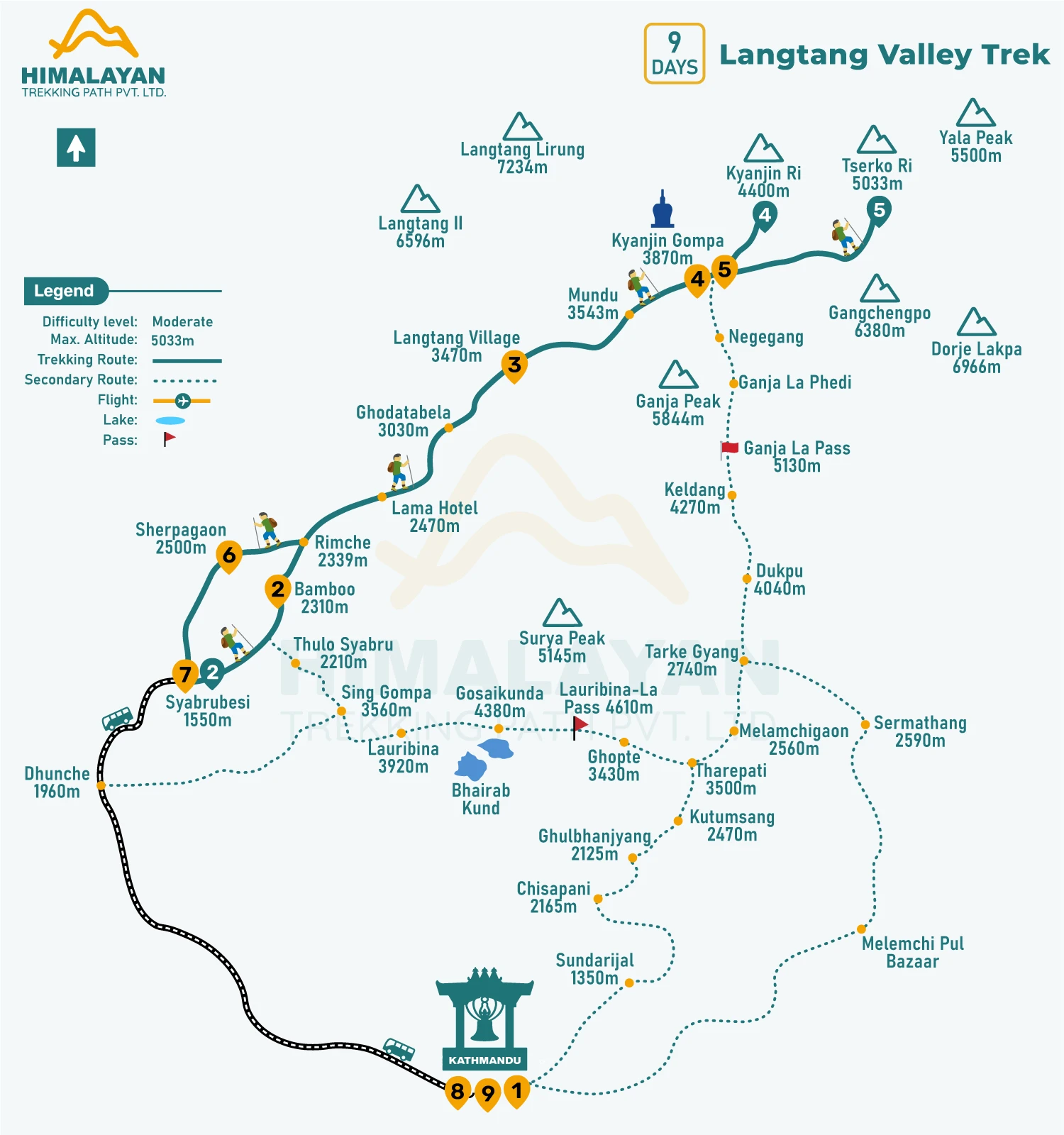
Early in the morning, we’ll drive along the riverside of the Trishuli River via a private vehicle. Accompanied by the scenery of foothills and ridgelines, this thrilling but scenic drive will gradually take you across the settlements of Trishuli Bazaar, Betrawati, and Dhunche, ultimately to the village of Syabrubesi (1,550m). Along the way, you will observe a spell-binding panorama embracing Mt. Annapurna II (7,937m), Mt. Manaslu (8,163m), Ganesh Himal (7,422m), and other neighbouring snow-clad peaks complemented by beautiful countryside comprising green hillocks, rivers, terraced farmlands, and beautiful villages. The drive takes only 4-5 hours to reach Syabrubesi. Today, you will start the trek and plan to reach Bamboo Village to stay overnight, which is only 6 km away from Syabrubesi Village. Along the jounrey, you will follow the Langtang Khola river, villages, a serene atmosphere, mountain views, and a narrow valley. Bamboo has three hotels and it offers very basic Accommodation, but it is perfect for a peaceful stay inside the jungle and riverside with soothing sounds. Stay overnight at the lodge after the warm mountain Dinner. 

Max. Altitude: 1550m/5085.302ftMeal: Breakfast, Lunch and DinnerAccommodation: Hotel

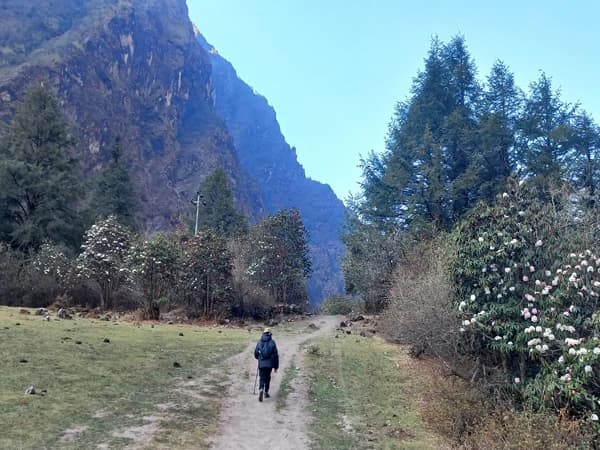
Today, we will begin our trekking venture right after breakfast. Normally, we have breakfast between 6:30 to 7:30 am, then head to the destination (Langtang Valley). From Bamboo Village, the trail ascends to Rimche Village along the Langtang Khola and through beautiful, lush rhododendron, Maple, and oak forest. After a one-hour trek, you will cross the suspension bridge where you can meet a tea House for a break, where you will get refreshing drinks and food. Walking through the beautiful landscape to Rimche Village along the trail, you will encounter a landslide area. From the Rimche village process onwards to Lama Hotel, riverside, Ghodatabela, Thangshyap, and Gomba before reaching the final destination (Langtang Valley) on the third day of the trek. During this journey, we can spot a variety of wildlife such as Langur monkeys, red pandas, Himalayan black bears, and yellow-throated martens if you are lucky. Continuing our trek above the Langtang Khola, we climb uphill on the trail that shortly becomes precipitous and proceeds beyond the woodland of rhododendron, oak, and maple. En route, we can catch a mesmerizing glance of Langtang Lirung towering at 7,246m asl. Thereafter, we forge ahead across a log bridge and then ascend far off, pursuing the trekking trail to the thriving grassland of Ghora Tabela (2,992m). From this point onwards, the trail slowly ascends to the setting where the valley spreads out in the form of lush pastureland, particularly used to graze yaks. Past this terrain, we move further along the trail and progress up through rhododendron vegetation and Tamang & Tibetan settlements. Subsequently, making our way over the spouting stream, we push forward by the prayer wheels and mills powered by the force of flowing water to set foot in Langtang (3,480m). The beautiful village of Langtang features flat-roofed Tibetan-style houses and farmlands of wheat, turnips, buckwheat, and barley fenced with stone walls.


Max. Altitude: ( 3400m/11154.86ft)Meal: Breakfast, Lunch and DinnerAccommodation: Home stay

Today, we follow the windy trail that proceeds uphill to the top of a ridge, highlighting a giant Chorten. Now, the trekking trail leads the way beyond the colossal Mani wall and a spurting stream to Mundu Village (3442m). Succeeding its headway across multiple wooden cantilever bridges over several small streams, the trail finally arrives at Kyangjin Gompa (3,870m). As the name suggests, this place is celebrated for Kyangjin Gompa, an elegant monastery. In addition, this place is also home to a government-run cheese manufacturing facility. You can explore this facility and get a taste of cheese and curd made from Yak milk. A wander around this outlandish land delivers 360 degree views of mountains, including Langtang Lirung (7,246m), Tsergo RI (5,000m), Ganja La (5,160m), Dorje Lhakpa (6,430m), Yala Peak (5,500m), Langshisa Ri (6,427 m), and Naya Kang (5,844m). Check in the guest House and have a savory mountain Lunch at the same lodge before heading on a 3 to 4-hour hiking tour to Kyanjing Ri (4400m). Bring a small bag with a snack or energy bar, water, and warm clothes for the hike that takes 2 hours to ascend and then 1-1.5 hours to descend. Along the hike, you will witness the magnificent mountain vista of the entire Langtang range. Every step of the hike provides even better and clearer views. This is a must-do hike for excellent mountain views, the valley, and glacier lakes. Celebrate the successful hike and take a memory before descending to the Kyanjing Gompa. 

Max. Altitude: 4400mMeal: Breakfast, Lunch & DinnerAccommodation: Guest House

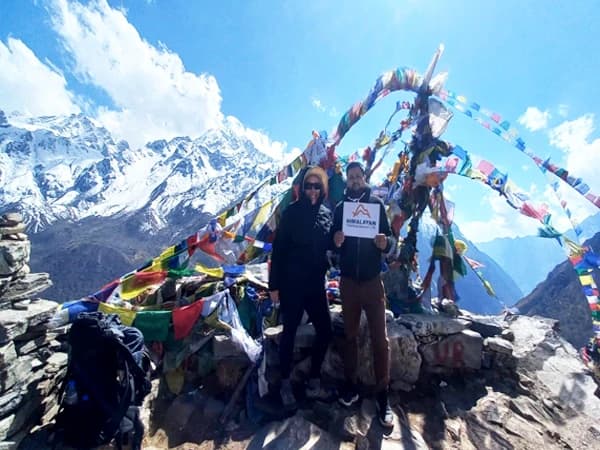
This very day is entirely dedicated to acclimatization and exploration of the surrounding area. As a thinner atmosphere with low levels of oxygen is found at higher elevations, it is necessary for us to acclimatize to the surroundings properly so that we don’t become victims of AMS (Acute Mountain Sickness). Also, it is a fact to be noted that we can speed up the process of acclimatization via short hikes. So, we hike to Tserko Ri (5,000m), the highest point of our entire trek. The ascent takes about 4-5 hours, depending on your physical fitness. Adorned with prayer flags, the apex of this peak bestows the sublime panorama of the whole Langtang Valley, along with the snowy peaks of Dorje Lakpa and Shisha Pangma to the east, Langtang to the west, and Yala Peak to the north. Moreover, you can also clearly spot the Ganja La Pass. Hike starts early morning, about 6:00 am, before that we will have a warm breakfast and take away Lunch, some energy bar, and enough drinking -2 letter at least along with warm clothes including a windbreaker. This is one of the breathtaking hiking trail destinations of the Langtang Trek. it provides the finest mountain views of the Langtang region. After the hike, we will go back to Kyanjing Gomba and stay overnight here.

Max. Altitude: 5000m/16404.2ftMeal: Breakfast, Lunch and DinnerAccommodation: Hotel

Today marks the beginning of your return journey from the stunning Langtang Valley Trek, retracing your steps while exploring new, less-traveled Sherpa villages. This scenic 20–22 km descent takes approximately 6–7 hours and passes through Mundu, Langtang, Gomba, Thyangsyap, Ghodatabela, Lama Hotel, and Rimche. Along the way, you'll encounter diverse landscapes, changing climates, rich flora and fauna, and breathtaking Himalayan views. This route offers a deeper cultural experience, with unique insights into local life and traditions in the Langtang region. Take your time to fully absorb the serene beauty, untouched trails, and the peaceful charm of this unforgettable Himalayan journey.


Max. Altitude: 1550m/5085.302ftMeal: Breakfast, Lunch and DinnerAccommodation: Hotel

The trek from the Sherpa village to Syabrubesi covers approximately 12-14 kilometers and takes about 5–6 hours. Descending through lush forests, cascading waterfalls, and vibrant rhododendron groves, the trail offers stunning views of snow-capped peaks and deep river valleys. As you pass through traditional Tamang and Sherpa settlements, you'll witness daily village life and ancient Himalayan culture. The peaceful surroundings and diverse landscapes provide the perfect finale to your Langtang adventure. This scenic route is rich in biodiversity and offers an immersive experience of the region's natural beauty before concluding your journey at the charming town of Syabrubesi.

Max. Altitude: 1550m/5085.302ftMeal: Breakfast, Lunch & DinnerAccommodation: Hotel

Bidding our final farewells to the fascinating valley of Langtang and its good-natured residents, we drive back to Kathmandu via a private Jeep vehicle. This ground journey on the rugged path along the ferocious river Trishuli takes about 5-6 hours, depending on traffic conditions. En route, we can enjoy the view of aesthetic landscapes comprising native settlements, pristine streams, terraced hills, and snow-covered peaks as a backdrop. Once in Kathmandu, you can visit the landmark sites that are yet to be explored. Also, you can do some souvenir shopping for your family or loved ones.

Max. Altitude: 1350m/4429.13ftMeal: Breakfast, Lunch & DinnerAccommodation: Hotel

Today is the last day of your Langtang Valley Trek. We hope that you are pleased with our service and expertise, and we expect to meet you again during your next travel venture. To ensure you won’t encounter. One of our representatives will guide you to Kathmandu Airport, 3 hours prior to your scheduled flight back home. Bon Voyage!!

Max. Altitude: 1350m/4429.13ftMeal: Breakfast
Cost Details
Included

Airport Transportation:

  • Airport Pick Up and Drop Off Service

Ground Transportation:

  • Travel from Kathmandu to Syabrubesi (Trekking Starting Point) by Private Jeep. 
  • Return from Syabrubesi (Trekking Ending Point) to Kathmandu by Private Jeep.

Meals and Drinks during the Langtang Trek:

  • Mountain meals including Breakfast, Lunch, and Dinner
  • Every day, 3 cups of Tea or Coffee 
  • Fresh Fruit, Nuts, Cookies, Ect.

Permits and Formalities:

  • Langtang National Park Permit Fees -Rs.3000 per person
  • TIMS (Trekkers' Information Management System) Card -Rs. 2000 per person 

Official fees:

  • Nepal Government Tax: 13% 
  • Himalayan Trekking Path Company service fees.

 Accommodation:

  • 2 Nights' Accommodation in Kathmandu at a Comfortable Hotel with a complimentary breakfast. 
  • 2 nights' Accommodation in Syabrubesi at a beautiful lodge.
  • One night's accommodation in Bamboo at a basic Lodge 
  • 1-1 night's Accommodation in Langtang and Kyanjing Gomba at a comfortable lodge.

Professional Local Guide:

  • A professional Local Guide up to 6 trekkers, and if there are more than 6, there will be an additional guide.
  • All the Guide-related expenses, including Salary, Trekking Gear, meals, Insurance, Tansportation, Accommodation, etc.

Trekking Gears:

  • Trekking Map, and a duffel bag
Excluded

Travel & Nepal entry fees:

  • Nepal Travel Visa Fees ( USD 30 for 15 days, USD 50 for 30 days, and USD 125 for 90 days per person)
  • International air fares (both in and out)
  • Travel insurance that includes Medical and rescue.

Meals and Accommodation:

  • Extra night Accommodation and meals in the Mountain.
  • Meal (Lunch & Dinner) in Kathmandu
  • Dessert and extra Tea or coffee in the Mountain

Drinks :

  • Drinking water (Mineral water, filtered, and boiled)
  • Soft drinks (Cola, Sprite, Fanta, juice, and energy drinks )
  • Hard Drinks ( All kinds of liquor)

Porter Support:

  • One porter can be considered for 2 trekkers.
  • One Porter service fees will be 25 $ per day that includes (Salary, insurance, transportation, accommodation, trekking gears, and meals)
  • If you want to hire a private porter, that will be possible, but the cost is USD25 per day.

All kinds of trekking gear:

  • Head Light, trekking poles, Hiking boots, jackets, pants, water bottles, shorts, T-shirts, shoes, socks, toiletries, hiking clothing, etc.

Others:

  • Wifi, Hot Shower, Laundry, etc.
  • Tips for the Guide and Crew 
  • Extra Activites and Accommodation 
Dates & Availability
Starts:Jan 21, 2026Ends:Jan 29, 2026
PriceUS$500
AvailabilityGuaranteed
Starts:Jan 23, 2026Ends:Jan 31, 2026
PriceUS$500
AvailabilityGuaranteed
Starts:Jan 24, 2026Ends:Feb 01, 2026
PriceUS$500
AvailabilityGuaranteed
Starts:Jan 26, 2026Ends:Feb 03, 2026
PriceUS$500
AvailabilityGuaranteed
Starts:Jan 27, 2026Ends:Feb 04, 2026
PriceUS$500
AvailabilityGuaranteed
Starts:Jan 29, 2026Ends:Feb 06, 2026
PriceUS$500
AvailabilityGuaranteed
Starts:Jan 31, 2026Ends:Feb 08, 2026
PriceUS$500
AvailabilityGuaranteed

Are you looking for a group joining option with a fixed departure schedule for the Langtang Valley trek? Look no further! We are excited to offer our ideal schedule for the Langtang Valley trek. You can join us effortlessly and enjoy exceptional service at a reasonable price. Your preferred departure date will be set as our fixed departure, and if there are no other participants, we still guarantee a 100% departure with no additional fees. Your worries are behind you- let's enjoy this exciting Langtang Valley Trek package alongside our experienced trekking team throughout the trip

Add-ons & Options

Explore the stunning Langtang Valley and the surrounding spectacular mountains with the Himalayan Trekking Path, the perfect gateway of your lifetime journey. Discover the forgotten scenic and serene ambiance of the Langtang Valley Trek with us. We are thrilled to announce that some of the excluded services that you can add on your journey for your desire and comfort. Therefore, the best way to do the Langtang valley trek according to your budget and willingness is by choosing extra services as below.

  • Trekking Porter for the entire Jounrey: USD 150: one porter for two clients, max weight is 18 kg. In this cost, all the porter-related expenses like food, salary, insurance, accommodation, and treking gear are included. If you prefer not to share the porter, you can book a private one for USD150.

Additional Info

Within the additional information provided, you can access comprehensive details concerning the verification of your reservation, our policies on cancellations, payment conditions, the complexity level, necessary permits, the best time to embark on the journey, a suggested packing checklist, the option of hiring guides and porters, meal choices, specifics on accommodations, and transportation logistics. We strongly advise visiting our website to gather all the essential details. If you choose to make a reservation with us, rest assured that we are dedicated to delivering outstanding service. Kindly refer to the specifics outlined below.

How do I book the Langtang Valley Trek?

Explore the captivating, concise, and gratifying Langtang Valley, a popular adventure package highly sought after by hikers worldwide. Renowned as the most serene in the Himalayas of Nepal, it offers unparalleled opportunities to explore the breathtaking Langtang region. Our company stands out as a premier local operator in Nepal, catering to the strong demand for this trek. To cater to our valued customers, we have implemented a seamless and reliable booking system. You can easily secure your spot by completing our online form or reaching out to us via email, WhatsApp, or other communication platforms. In order to confirm your reservation, we kindly request your passport details for necessary procedures and your flight itinerary for convenient airport pick-up arrangements. Additionally, we offer flexibility in deposit payment, allowing you to choose between paying at the time of booking or upon your arrival.

How can I pay for the Langtang Valley Trek?

We provide our esteemed clients with multiple payment options for the Langtang Valley trekking package. You can opt to settle the payment during the booking process or upon your arrival. Our payment methods include online transfer, credit card, or cash. Please note that a 4% bank service charge will be added to the total amount if you choose to pay by card. For cash payments, you can use the local currency or other currencies accepted by the Nepal government, such as USD, AUD, EURO, CAD, RMB, and more.

Is there a cancellation policy?

The majority of trekking reservations are non-refundable; nevertheless, at Himalayan Trekking Path, we offer a flexible cancellation policy within a specific timeframe. We recognize that plans can sometimes change unexpectedly, so we provide complimentary cancellations for bookings made up to 30 days before the trip. Please be aware that any cancellations made after this period are non-refundable. Trekking involves the meticulous coordination of various components, such as hotels, transportation, flights, guides, porters, mountain accommodations, and permits. We encourage you to explore our packages and services, and if they do not completely meet your needs, customization is always an option. Once your reservation is confirmed, we kindly ask that you refrain from canceling, as we will promptly begin making arrangements for a seamless experience. Our company values its reputation, and canceling may impact our relationship with local stakeholders and the overall quality of our services in the future. To maintain our standing in the tourism industry and be seen as trustworthy, we kindly request that you refrain from canceling once your reservation is confirmed. However, we do understand that unforeseen circumstances may arise, and in such instances, we can accommodate a change in the travel date.

What are the best seasons for the Langtang Valley Trek?

Experience the marvels of the Langtang Valley Trek all year round with the renowned Himalayan Trekking Path Company. Our dedicated team specializes in tailoring the trek to suit your personal preferences and schedule. However, if you are seeking an extraordinary adventure during the optimal time, we provide a range of options for you to choose from. The autumn season (September to November) and spring season (March to May) are considered the best times for the Langtang Valley Trek. Please let us know your preferred season to embark on an unforgettable journey. Additionally, February, August, and December are also favorable months for the Langtang Valley Trek.

Autumn (September to November):

  • Day temperature (10°C to 25°C (50°F to 77°F)) in Low Elevation
  • The nighttime temperature will be freezing in High Elevation

Autumn presents an ideal opportunity to embark on the Langtang Valley Trek, just like in other parts of Nepal. With less rainfall, travelers can bask in sunny days that showcase the vibrant greenery at lower altitudes and awe-inspiring landscapes. The weather is generally pleasant, with warm temperatures and stable conditions. This time of year offers a wonderful chance to admire the majestic Himalayan peaks and immerse oneself in the beauty of lush valleys, including those shaped by rivers. Occasionally, there may be some congestion along the trail. If you are planning to undertake the Langtang Valley Trek, it is advisable to carefully plan and secure a comfortable stay at the tea house. Additionally, this season brings a festive atmosphere that adds to the overall experience.

Spring (March to May):

  • Day temperature (10°C to 25°C (50°F to 77°F))
  • The nighttime temperature will be freezing in High Elevation

Embarking on the Langtang Valley Trek during the spring season guarantees an extraordinary and memorable adventure. With longer daylight hours, ideal weather conditions, and pleasant temperatures, it provides an ideal setting for exploration. Throughout this expedition, one cannot help but be enthralled by the enchanting beauty of spring, from vibrant and blooming flowers to the melodious songs of birds. As you traverse through lower altitudes, you will be greeted by lush green landscapes, while ascending to higher elevations will reward you with awe-inspiring mountain vistas.

Monsoon (June to August): 

  • Day temperature (15°C to 25°C (59°F to 77°F)) in Low Elevation
  • The nighttime temperatures range from 1°C to 10°C (34°F to 50°F) in High Elevation

It is recommended to avoid trekking in the Langtang Valley during the rainy seasons of June, July, and August. However, if you are lucky, you may still have a wonderful trekking experience. Rainfall may pose challenges, but with the right gear, the trek can be manageable. At times, landslides, cloudy weather, or heavy rain can obstruct the trail or disrupt transportation due to road closures from landslides. This may result in limited visibility. If you are thinking of embarking on this adventure during this time, we are happy to provide assistance. Please note, though, that the success of the journey is not guaranteed.

Winter (December to February)

  • Day time temperatures (5°C to 10°C (41°F to 50°F) in Low Elevation
  • The nighttime temperatures range from -10°C to -20°C (14°F to -4°F) in High Elevation

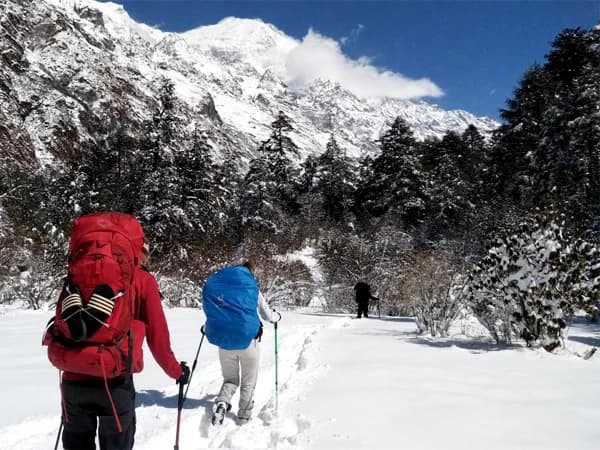
The winter season, encompassing December, January, and February, is generally not recommended for high-altitude treks. However, the Langtang Valley Trek can still be undertaken during this time, provided that the weather conditions are not too severe. Despite the chilly temperatures, you can still have a fulfilling experience on the trek with the appropriate gear, and you are likely to encounter fewer fellow travelers along the route. The weather during this season is typically unpredictable and subject to frequent changes, with occurrences of snowfall, storms, and avalanches being common. Nonetheless, we offer an exceptional winter trekking experience for the Langtang Valley, with only a few exceptions. February and December are particularly ideal for those seeking a quieter and more serene journey.

Is travel insurance mandatory?

Travel insurance is vital for any expedition in Nepal, like the Langtang Valley Trek. Your well-being is our utmost priority, and having the right travel insurance is essential for emergencies. We highly suggest all hikers secure comprehensive travel insurance that covers rescue operations, theft, and medical emergencies.

What transportation is included in the Package?

Himalayan Trekking Path Pvt. Ltd. offers comfortable private jeep transportation from Kathmandu to Syabrubesi and back, included in their Langtang Valley Trek package. A private jeep takes about 5–6 hours, saving time and offering a smooth ride compared to the public bus, which takes 8–9 hours and departs at 7:00 AM. For budget travelers, public buses or shared jeeps are also available at a lower cost with us. Choose the option that suits your comfort and budget. Contact Himalayan Trekking Path today and plan your Langtang Valley Trek with expert guidance and reliable transport. We’re here to help!

Tipping Culture:

Tipping is a common practice in the tourism industry in Nepal. When utilizing airport transportation services, it is customary to leave a tip for the driver. Similarly, when dining for lunch or dinner, it is expected to show appreciation by leaving a tip for the staff. This practice also applies to trekking guides, tour guides, climbing guides, and porters. The amount of the tip is discretionary and should reflect your satisfaction with the service received.

Farewell

On behalf of the Himalayan Trekking Path Company, we are delighted to invite you to a farewell dinner in honor of your upcoming departure. This special occasion will also serve as an opportunity for us to present you with an appreciation certificate and engage in a conversation about your trip, allowing us to gather your valuable suggestions and reviews. Your kind feedback holds great significance for our company.

FAQs

Highlights include the culturally rich villages of Langtang and Kyanjin Gompa, majestic views of Langtang Lirung, visits to Buddhist monasteries, yak pastures, and the famous Kyanjin Cheese Factory. The trek also features diverse landscapes—dense forests, waterfalls, glacial valleys, and panoramic ridges. Optional hikes to Kyanjin Ri or Tserko Ri offer some of Nepal’s best sunrise views. Wildlife sightings, including red pandas, make the trail even more exciting. The warmth of Tamang culture and the resilience of local communities are unforgettable aspects of the journey.

The Langtang Valley Trek is ideal for trekkers seeking a short, culturally rich, and scenic Himalayan journey close to Kathmandu. It offers spectacular mountain views, peaceful trails, authentic Tamang hospitality, and diverse landscapes from forests to glaciers. The trek is moderately challenging, making it suitable for a wide range of trekkers. With manageable duration, comfortable teahouses, and rewarding high-altitude viewpoints, Langtang stands out as one of Nepal’s best short treks. Its blend of nature, culture, and accessibility makes it a favorite among travelers.

The Langtang region is rich in wildlife, especially within Langtang National Park. Trekkers may encounter Himalayan thar, red pandas, langur monkeys, musk deer, and various bird species like pheasants and Himalayan griffons. Dense forests of rhododendron, bamboo, and oak create habitats for diverse fauna. While wildlife sightings are not guaranteed, early mornings increase your chances. Guides often help identify animals and explain the region’s ecology. The natural biodiversity enhances the overall trekking experience.

The highest sleeping point is Kyanjin Gompa (3,870m). However, many trekkers hike to Kyanjin Ri (4,773m) or Tserko Ri (5,000m) for breathtaking sunrise views. These climbs are optional but highly recommended for panoramic views of Langtang Lirung, Dorje Lakpa, Yala Peak, and surrounding glaciers. The ascent is challenging but doable with a steady pace. Since these are day hikes, trekkers return to Kyanjin Gompa for the night. The high-altitude side trips are highlights of the trek.

Yes, the Langtang Valley Trek is suitable for beginners with basic fitness and preparation. The trail involves daily hikes of 5–7 hours and gradual altitude gain, making it ideal for first-time trekkers who want a Himalayan experience without extreme difficulty. Hiring a guide ensures support, proper pacing, and safety. Beginners should train with regular walking, cardio, and light strength exercises before the trek. With proper gear and acclimatization, the trek is manageable and rewarding for new trekkers.

Yes, the Langtang region is safe for trekking, with well-marked trails, friendly locals, and experienced guides available. Since the 2015 earthquake, the region has been rebuilt with better infrastructure and improved safety standards. Trekkers should still be cautious of altitude sickness, weather changes, and slippery trails in monsoon. Traveling with a licensed guide enhances safety. Mobile networks and emergency rescue services are available in most areas. Overall, it’s a secure trekking destination when proper precautions are taken.

There are no ATMs along the Langtang Valley Trek route. Trekkers must withdraw enough cash in Kathmandu or Syabrubeshi before departure. Expenses include meals, accommodation, tea/coffee, hot showers, Wi-Fi, charging fees, snacks, and tips for guides and porters. Bring extra cash for emergencies or if you decide to stay additional nights. Although teahouses accept Nepali rupees only, keeping small denominations helps with easier transactions. Proper planning ensures a smooth trek without financial inconvenience.

Yes, travel insurance is highly recommended for the Langtang Valley Trek. It should cover high-altitude trekking, emergency medical care, and helicopter evacuation, which can be extremely expensive without insurance. Policies should clearly state coverage up to at least 4,500–5,000 meters. Insurance also helps with lost baggage, trip cancellation, and accidents. Many trekking agencies require proof of insurance before departure. Always carry a digital and printed copy of your policy while trekking and ensure your guide is aware of your insurance details.

Essential gear includes trekking boots, warm layers, waterproof jacket and pants, gloves, hat, UV sunglasses, trekking poles, sleeping bag, headlamp, and a sturdy backpack. Bring refillable water bottles, purification tablets, sunscreen, basic meds, and personal hygiene items. Electronics like power banks and chargers are useful since electricity can be limited. A down jacket is recommended for higher altitudes. If you do not own all items, many can be rented or purchased in Kathmandu. Pack light but ensure comfort and safety throughout the trek.

Temperatures vary by season. Spring and autumn are mild, with daytime temperatures between 10–15°C at higher altitudes and cooler nights around -2 to 5°C. Winter can drop to -10°C or lower at Kyanjin Gompa, especially at night. Proper layering is essential: thermal base layers, fleece jackets, windproof outer layers, warm hats, gloves, and sleeping bags rated for cold conditions. Weather can change quickly in the mountains, so trekkers must be prepared for cold mornings, chilly evenings, and potential snowfall in high-altitude zones.

The Langtang Valley Trek is the best short Trek in Nepal, located in the Langtang National Park. The Langtang Valley Trek is a scenic journey through one of Nepal’s closest Himalayan regions to Kathmandu, offering stunning mountain views, Tamang culture, alpine forests, and glacier landscapes. The trek typically takes 7–10 days, starting from Syabrubesi and following the Langtang River to Kyanjin Gompa. It’s known for its accessibility, moderate difficulty, peaceful trails, and rich biodiversity within Langtang National Park. Trekkers enjoy panoramic peaks like Langtang Lirung, visits to monasteries, yak pastures, and optional climbs to Kyanjin Ri or Tserko Ri for sunrise views. It’s ideal for trekkers seeking a shorter yet rewarding Himalayan adventure.

The trek starts from Syabrubesi, a village about 7–8 hours’ drive north of Kathmandu. The road journey follows winding mountain roads through scenic landscapes and rural settlements. Public buses, shared jeeps, and private vehicles are available, with private transport offering more comfort and flexibility. Syabrubesi serves as the gateway to Langtang, Tamang Heritage, and Gosainkunda trekking routes. The trek begins by crossing the Bhote Koshi River and gradually ascending through forests and villages along the Langtang Khola. It’s a lively starting point with basic teahouses and shops.

Hiring a guide is recommended for safety, navigation, cultural insight, and arranging accommodation. A guide enhances your experience, especially in areas rebuilt after the 2015 earthquake. A porter can carry 15–20 kg of your load, making the trek more comfortable. While solo trekking is allowed, many prefer guides for security and convenience. Booking through Himalayan Trekking Path Pvt. ltd. ensures licensed, insured staff and supports local communities. For first-time trekkers or those concerned about altitude, having a guide and porter is especially beneficial.

Meals include traditional Nepali dishes like dal bhat, Tibetan bread, momos, soups, noodles, fried rice, and pasta. Breakfast often includes porridge, eggs, pancakes, and tea. Food is freshly prepared, but options decrease at higher elevation. Dal bhat is highly recommended for energy and hygiene. Teahouses also sell snacks, chocolate, and hot drinks. Vegetarian meals are widely available. Trekkers should avoid raw foods, excessive meat, and unfiltered water; always use purification tablets or buy boiled water. Overall, the trek offers nutritious meals suited for high-altitude trekking.

Accommodation is in teahouses, offering basic but comfortable rooms with twin beds, blankets, and shared bathrooms. Dining areas are warm and social places where trekkers gather for meals. Rooms get more basic as you go higher, with limited electricity and hot showers. Wi-Fi and charging facilities may require extra payment. Despite simplicity, teahouses provide friendly hospitality and authentic Nepali and Tibetan-inspired meals. Specifically, the  Lama Hotel Stay is too basic. Booking is usually not required except during peak season when lodges may fill up quickly. Overall, accommodation is reliable and suitable for trekkers of all levels.

Yes, altitude sickness can be a concern as the trek ascends above 3,000 meters. Symptoms include headache, nausea, loss of appetite, and dizziness. The best prevention is to ascend gradually, stay hydrated, rest adequately, and allow acclimatization days, especially around Langtang Village or Kyanjin Gompa. Avoid rushing, alcohol, and sleeping pills. If symptoms worsen, descend immediately. Guides are trained to recognize early signs and assist with proper care. While the risk is lower than on higher treks like Everest or Annapurna, awareness and caution remain important.

The best seasons are spring (March–May) and autumn (September–November) when the weather is stable, visibility is clear, and temperatures are comfortable. Spring offers rhododendron blooms, while autumn provides crystal-clear skies and mountain views. Winter trekking (December–February) is possible but cold, with snowfall at higher altitudes. The monsoon season (June–August) brings rain, slippery trails, and limited visibility, though the valley becomes lush and green. Each season has unique charm, but for the safest and most enjoyable experience, spring and autumn are ideal.

Trekkers need two permits: Langtang National Park Entry Permit and TIMS (Trekkers’ Information Management System) card. The Langtang National Park permit helps fund conservation and trail maintenance, while TIMS ensures trekking safety and registration. Both can be obtained in Kathmandu or at the park entry point. If you join a trekking agency, they typically manage all permits for you. Carry photocopies of your passport and ensure permits are checked along the route. These permits are mandatory for all trekkers in the Langtang region.

The trek usually takes 7 to 10 days, depending on your pace, acclimatization needs, and planned side trips. The classic itinerary begins with a drive from Kathmandu to Syabrubesi and follows the Langtang River to Lama Hotel, Langtang Village, and Kyanjin Gompa. Trekkers often add an extra day for climbing Kyanjin Ri or Tserko Ri, which offers exceptional sunrise views of Langtang Lirung and surrounding peaks. The trek length is flexible and suitable for travelers with limited time who still want a complete Himalayan trekking experience.

The Langtang Valley Trek is considered a moderate trek suitable for beginners with basic fitness and experienced trekkers alike. The trail includes steady uphill sections, forested paths, suspension bridges, and gradual altitude gain. The highest point, Kyanjin Ri (4,773m) or Tserko Ri (5,000m), is optional but more challenging. With daily walking of 5–7 hours, the trek requires endurance but no technical skills. Proper acclimatization, steady pacing, and preparation significantly reduce difficulty. Overall, it's easier than Everest Base Camp or Annapurna Circuit but still offers rewarding Himalayan scenery.