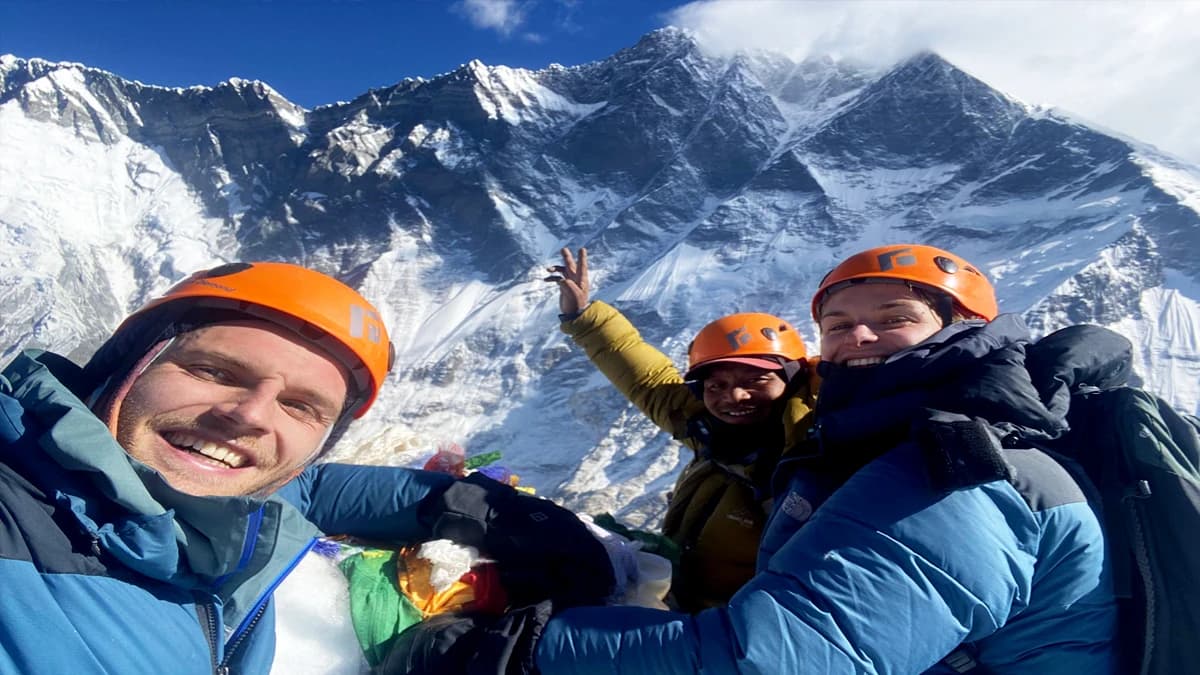
Lobuche East and Island Peak Climbing

Lobuche and Island
159 reviews in TripAdvisor
69 reviews in Google
Lobuche East and Island Peak Climbing
At a Glance
Duration22 Days
Trip GradeTechnically Challenging
i
CountryNepal
Maximum Altitude6,189m/20,305ft
Group Size1 to 10 pax
StartsKathmandu
EndsKathmandu
Travel StyleTrekking and Climbing
Best TimeSeptember to November and March to May

 Lobuche and Island Peak Climbing with Everest Base Camp Trek

Lobuche and Island Peak Climbing with the Everest Base Camp Trek is the ultimate Himalayan adventure for those who dream beyond ordinary trekking. This exclusive expedition combines the legendary Everest Base Camp Trekwith the thrilling ascent of two iconic peaks above 6,000 meters (Lobuche Peak Climbing & Island Peak Climbing), delivering a perfect balance of high-altitude trekking and technical mountaineering. Carefully designed for optimal acclimatization, the classic Everest Base Camp route enables you to adapt comfortably to the altitude before tackling the exhilarating climbs ofLobuche Eastand Island Peak (Imja Tse). Each successful summit rewards you with breathtaking panoramic views of Mount Everest, Lhotse, Nuptse, Ama Dablam, and the surrounding Himalayan giants. This once-in-a-lifetime journey is not only an extraordinary personal achievement but also an ideal training ground for future 7,000-meter and 8,000-meter expeditions. Enriched by authentic Sherpa culture, warm mountain hospitality, and awe-inspiring alpine landscapes, this adventure promises a truly unforgettable and transformative Himalayan experience. Book Lobuche and Island Peak Climbing with Himalayan Trekking Path Pvt. Ltd. for maximum flexibility, top-notch service, competitive pricing, expert climbing guides, genuine local expertise, and impeccable hospitality. This is your moment, step into the Himalayas and make your mountaineering dream a reality.

Highlights of the Lobuche and Island Peak Climbing 

  • Discover the charms of Kathmandu before embarking on the Lobuche and Island Peak Climbing adventure
  • Catch an early morning flight from Kathmandu or Ramechhap to Lukla to kickstart the journey
  • Trek along the renowned Everest Base Camp Trek, a world-famous route
  • Marvel at the breathtaking mountain vistas, including Mt. Everest, Mt. Makalu, Mt. Lhoste, Mt. Nuptse, Amadblam, Pumari, and other majestic peaks
  • Immerse yourself in the rich Sherpa Culture and lifestyle, and visit the picturesque monasteries
  • Delve into the diverse flora and fauna of the region
  • Conquer the challenging Lobuche Peak (6119 m) and Island Peak (6189 m) summits
  • Experience the thrill of reaching the top of these iconic peaks
  • Create unforgettable memories amidst the stunning Himalayan landscapes
  • Enjoy the sense of accomplishment and fulfillment that comes with completing this incredible climbing journey

Lobuche & Island Peak Climbing Itinerary

Have you ever dreamed of standing atop two Himalayan peaks in a single journey while trekking to the legendary Everest Base Camp? The Lobuche East and Island Peak Climbing with Everest Base Camp Trek is an extraordinary expedition crafted for adventurers who seek challenge, achievement, and deep Himalayan immersion. This remarkable adventure combines three iconic experiences into one seamless journey. The trek follows the classic Everest Base Camp route, providing ideal acclimatization and unforgettable encounters with the world’s highest mountains. A hike to Kala Patthar reveals breathtaking views of Mount Everest, Lhotse, Nuptse, Ama Dablam, and surrounding giants. With altitude adaptation achieved, the expedition advances to true mountaineering. You first conquer Lobuche East Peak, one of the most technically demanding trekking peaks in the Khumbu region, sharpening your alpine skills. The challenge continues toward Island Peak (Imja Tse), a classic Himalayan summit offering glacier travel, steep snow slopes, and a thrilling summit push. The journey begins with a scenic flight to Lukla and unfolds through traditional Sherpa villages, lush forests, high suspension bridges, glacial valleys, and dramatic alpine landscapes. Beyond the physical challenge, you will experience Sherpa culture, Buddhist traditions, and legendary mountain hospitality. Despite demanding conditions, the reward is immense panoramic views of Everest, Makalu, Baruntse, Pumori, and countless Himalayan peaks. This expedition is not just a climb; it is a defining Himalayan achievement and an ideal preparation for higher mountains.

Can I do the Everest Base Camp trek during Lobuche & Island Peak Climbing?

Yes, absolutely. The 22-day Lobuche & Island Peak Climbing with Everest Base Camp Trek is specifically designed to include the full Everest Base Camp hike along with the iconic Kala Patthar viewpoint. The journey starts in Kathmandu with a scenic flight to Lukla, the gateway to the Everest region. During peak trekking seasons, flights may operate from Ramechhap, while a helicopter transfer is also available at an additional cost for direct travel between Kathmandu and Lukla. You follow the classic Everest Base Camp route, trekking through Phakding, Monjo, Namche Bazaar, Tengboche, Lobuche, and Gorakshep before reaching Everest Base Camp and hiking to Kala Patthar for stunning panoramic views of Mount Everest, Lhotse, Nuptse, Ama Dablam, Pumori, and Thamserku. Completing the Everest Base Camp trek provides excellent acclimatization, which is crucial for safely and successfully summiting Lobuche East and Island Peak. This makes the itinerary one of the best and safest ways to combine high-altitude trekking with technical peak climbing in Nepal.

How Many days does the Lobuche Climb require?

The Lobuche East Peak summit usually requires 2 to 3 days from Lobuche village. Climbers arrive in Lobuche after completing the Everest Base Camp Trek and the Kala Patthar hike, which provides excellent acclimatization and prepares the body for the first summit attempt. The climb begins from Lobuche village, where thorough preparation, safety checks, meals, and equipment organization are carried out. You then trek to Lobuche High Camp and participate in pre-climb training using technical mountaineering gear. If weather conditions are clear and stable, the summit push begins early the following morning. In the event of unfavorable weather, an additional night at High Camp may be required. After reaching the summit, climbers descend back to Lobuche village on the same day.

Island Peak Climbing: A Challenging Ascent 

The Island Peak Climbing experience follows the Everest Base Camp Trek and the adventurous Lobuche Peak Summit. You are invited to join the next exciting and challenging ascent of Island Peak, locally referred to as Imja Tse. This climb is somewhat technical following the Lobuche Peak, but with sufficient acclimatization and training, you will be prepared to tackle the Island Peak Summit (6165m). The ascent begins in Chhukung Valley and spans a two-day expedition. On the first day, you will reach the Island Peak Base Camp, enjoying breathtaking mountain views along the rugged trail that traverses moraines and glaciers. After arriving at the base camp, you will participate in training with the necessary equipment, ensuring you are both physically and mentally prepared for the summit. The following morning, you will commence your journey from the base camp at midnight, navigating the glaciers and ultimately reaching the summit at sunrise, providing a chance to witness the mountains in all their glory. Upon reaching the top, you will feel as though you have entered a different world, your heart filled with joy as you forget all previous challenges, feeling warmth and pride in this deeply emotional moment. After summiting, capture a lifetime photo and return to Chhukung, which marks a long but entirely rewarding adventure day.

What is the optimal time for climbing Lobuche and Island Peak?

Generally, the best time provides the most rewarding experience for the expedition. Selecting the appropriate time is essential, and we prioritize the safety of our clients. Typically, the Spring season, which includes the months of March, April, and May, is the prime time for the expedition; however, Autumn is preferable for trekking. Following the Spring season, the Autumn months of September, October, and November are also significant for peak climbing. During these seasons, the risk of avalanches and snowfall is reduced, and the weather conditions are generally stable, with pleasant temperatures and clear skies that offer stunning views of the mountains. The winter season is not advisable due to the extreme cold and frequent rain, which are generally considered significant challenges. However, some may find it contrasting with the adverse weather conditions.

Is the NNMGA guide included in the package?

No, we provide a peak climbing Sherpa guide as part of the package. If you wish to have the NNMGA guide, it will cost you between $150 to $200 per day for each guide. NNMGA guides are of high quality, having completed very expensive courses that run throughout most of the mountains and every season. There are only a limited number of NNMGA guides available, so if you want to book one for the Lobuche and Island Peak climbing, you need to make your reservation at least one month before the start of your trip.

Cost of Lobuche and Island Peak Climbing for 2026-2027

The cost for climbing Lobuche and Island Peaks ranges from USD 3000 to USD 3500 per person, depending on the group size. The total expense for the combined two-peak expedition is influenced by factors such as the level of service, trip duration, meals, gear, transportation, accommodation, Sherpa crews, guides, permits, and more. Our 22-day Lobuche and Island Peak climbing itinerary includes a trek to Everest Base Camp and Kalapatthar, which helps your body acclimatize to the rocky, snowy trails and elevation gain. The package for the Lobuche and Island Peak climbing covers all the services outlined in the itinerary. The overall cost varies based on the number of participants, as detailed below.

  • The cost of the Lobuche and Island Peak climbing for solo trekkers is USD 3200.
  • The cost is USD 3000 per person for groups of 2-6.
  • The cost is USD 2900 per person for groups of 7-10.
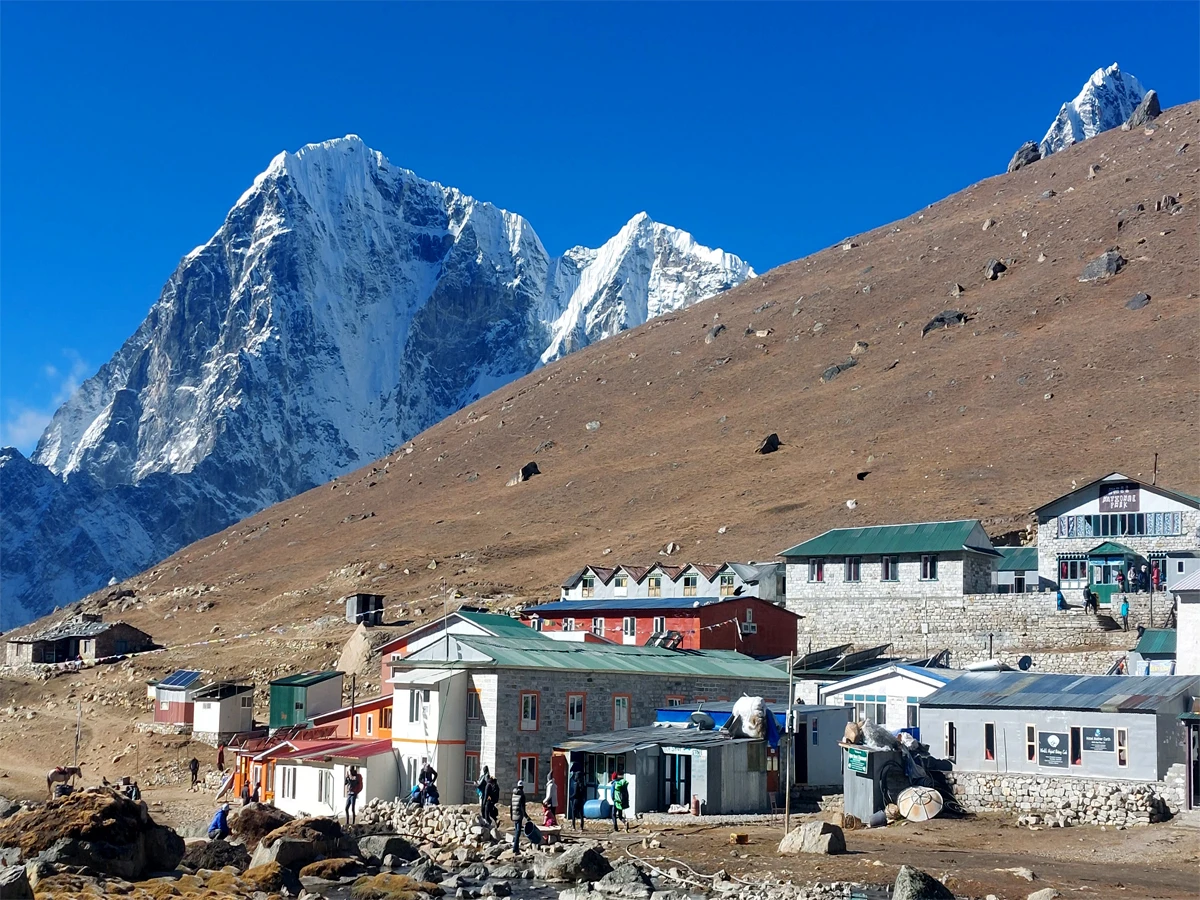
Itinerary
Tour PlanExpand All

Revel in delightful aerial vistas as soon as you fly above in the Nepalese skies. Upon your arrival at Kathmandu Airport, you’ll meet one of our representatives waiting to escort you to your hotel through swarming alleys of Kathmandu City via a private vehicle. After checking in at the hotel, freshen up and provide rest to your jet-lagged body. Once settled in, you can check out the monuments and historical buildings near to your living space. Don’t forget to wander around the radiant marketplace of Thamel in the evening. Also well-renowned as the ‘tourist hub’, it is an initial stopover of almost all the tourist visiting Nepal.

You’ll have a day out. If you want to explore the time-honoured Kathmandu Valley on your own then we are here to provide you vital assistance as well as useful words of advice; otherwise, we can arrange you a guided sightseeing day trip in the company of a knowledgeable tour guide. Get going with a visit to holy Hindu temple of Pashupatinath. Thereafter, steer towards the sacred Buddhist stupas of Swayambhunath and Boudhanath to experience the true essence of spirituality. Take a look at the Basantapur Durbar Square at the end of the day to witness the craftsmanship, architecture and artistic skills of Nepal’s ancient craftsmen. In addition to this joyous jaunt, you must make preparations for your upcoming escapade.

This morning, you’ll board a domestic flight bound to Lukla. In the course of this 30 minutes long scenic flight, you can observe picturesque landscapes together with sublime outlooks embracing snow-capped mountains. Subsequent to a dramatic landing at Lukla Airport, we’ll start off our trek and follow a rough yet well-marked path adjacent to the banks of Dudh Koshi River. Keeping our eyes on Mt. Nupla (5,885m) and Mt. Kusum Kanguru (6,367m); we’ll proceed through dense woods, monasteries, mani walls, and prayer flags passing by the settlements of Chheplung (2,660m), Thado Koshigoan (2,580m), and Nuring (2,492m) to arrive at Phakding (2,652m).

We’ll climb across the enchanting woodland of pine and rhododendron, rustic villages as well as a few suspension bridges. Surrounded by the majestic Himalayas including Mt. Kongde Ri (6,187m), the route gradually makes an ascent in the direction of Monjo Village (2,835m) aka the entrance gate to Sagarmatha National Park, a UNESCO natural world heritage site. With our permits examined in the check post, we’ll progress through the vicinity of National Park thriving with green wood to Jorsalle (2,740m). Crossing a high suspension bridge, we’ll move on a steep uphill path to Namche Bazaar (3,440m). We can watch the first glimpses of Everest on the way as it emerges in-between Lhotse and Nuptse as long as the weather is clear.

Proper acclimatization in higher altitudes is the key to avoid Acute Mountain Sickness which can be fatal if not treated correctly and quickly. At the elevation of 3,440m encircled by snowy summits, Namche Bazaar is one of the most admired places for trekkers and mountaineers to adapt in a new climate with low oxygen density so that they can stay healthy throughout this Himalayan adventure. We’ll familiarize ourselves with the surrounding here at Namche Bazaar. You can have a walk around this Sherpa town and visit Sherpas Museum and Sagarmatha National Park Visitor Centre in order to get acquainted with local culture and traditional lifestyle. On the other hand, you may like a hike to nearby tourist attractions such as Hotel Everest View or Kunde Village for magnificent mountain panoramas.

Freshened and reenergized, we’ll advance out of Namche Bazaar then stay with the windy pathway. We’ll traverse the pinewoods and proceed to Sanasa past Kenjoma (3,550m). The trail splits into two. One leads to Gokyo Valley (to the right) and another to Everest Base Camp. Advancing uphill across a suspension bridge to Phunke Tenga (3,260m), we’ll scramble up steeply through the woodland and water-driven prayer wheels to reach Tengboche (3,870m). En route, we can enjoy the lovely views of Ama Dablam, Lhotse and Taboche. Pay a visit to Tengboche Monastery and observe the soul-steering sunset over the peaks of Ama Dablam, Everest, Nuptse and Lhotse.

We’ll depart from the village of Tengboche to encounter a gentle descent to Deboche (3,820m). Navigating past the great boulders prayer stones and chortens, we’ll cross a suspension bridge at Milingo (3,750m) then forge ahead up to Somare (4,010m) and continue to Pangboche (3,930m). We’ll probably get a sight of exciting wildlife while on the move; so, keep your eyes open. The trail now leads along the Imja Khola above treeline, passing by the alpine vegetation and smaller hamlets to Dingboche (4,360m). Take a good look around this splendid settlement and feel the majesty of the snow-clad mountains. 

With a gradual climb, we’ll make our way out of Dingboche and pursue the Himalayan path on the other side of pasturelands and alpine vegetation dominated by grasses, herbs or sedges to Dughla (4,620m). We’ll discover the splendid panoramas including the elegant Ama Dablam, Taboche, and Cholatse along the way. Thokla Pass (4,830m) now lies ahead of us. While negotiating this precipitous pass, we’ll come across memorials dedicated to fallen mountaineers during Everest expeditions. Accompanied by views of Lhotse, Lhotse Shar and other neighbouring peaks, we’ll trek on lateral moraines of the Khumbu glacier to Lobuche (4,940m).

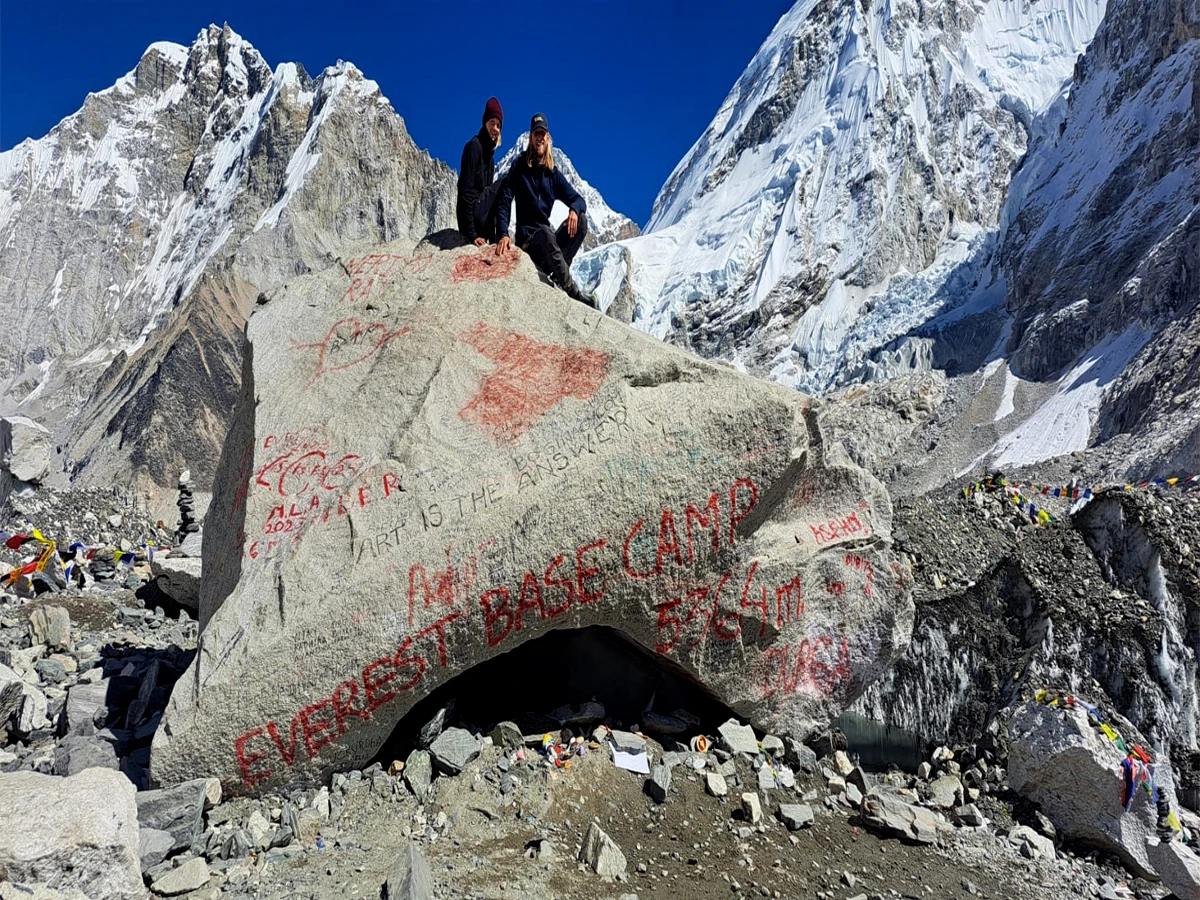
Overlooked by lofty Himalayan Range, the route now guides us down the Italian Pyramid (4,970m) to Lobuche Pass (5,110m). In the quest to travel over this high pass, we’ll overcome a twisting course on rugged terrain full of boulder beyond the formidable Khumbu Glacier; finally making it to Gorakshep (5170m). We can actually hear the creaking and cracking as these monstrous frozen glaciers move towards a lower position shaping up the deep mountain gorges.  Subsequently, we’ll trek to Everest Base Camp (EBC) following the trail that progresses along glacial moraines and sometimes over the glacier itself. Witness the beauty, majesty, and vastness of the world’s highest mountain from its foothills. EBC also accommodates numerous colourful camps belonging mountaineers during peak climbing season. You may interact with them for some helpful tips. We’ll eventually return to Gorakshep.

Before the crack of dawn, we’ll ascend the Kala Patthar peak to see the sunrise over the magnificent Mt. Everest. An iconic vantage point adorned with prayer flags at 5,545m asl, Kala Patthar (translates into Black Rock) extends spectacular outlooks of the Khumbu Glacier and close up views of the sun rising over the lofty mountaintops. After capturing these wonderful moments in our mind and cameras, we’ll head back to Gorakshep for some refreshment prior to our further advancement. Thereafter, we’ll walk down through Lobuche Pass and get to Lobuche (4,940m).

We’ll be on our way up to High Camp (5,400m) earlier than the daybreak so that we can utilize our maximum time preparing ourselves for what lies ahead. With our experienced climbing guide by your side, you’ll undergo pre-climb training during which, you’ll acquire skill in climbing techniques and operation of various mountaineering gears. Apart from that, we can gaze at the soul-stirring sunset views in the evening.

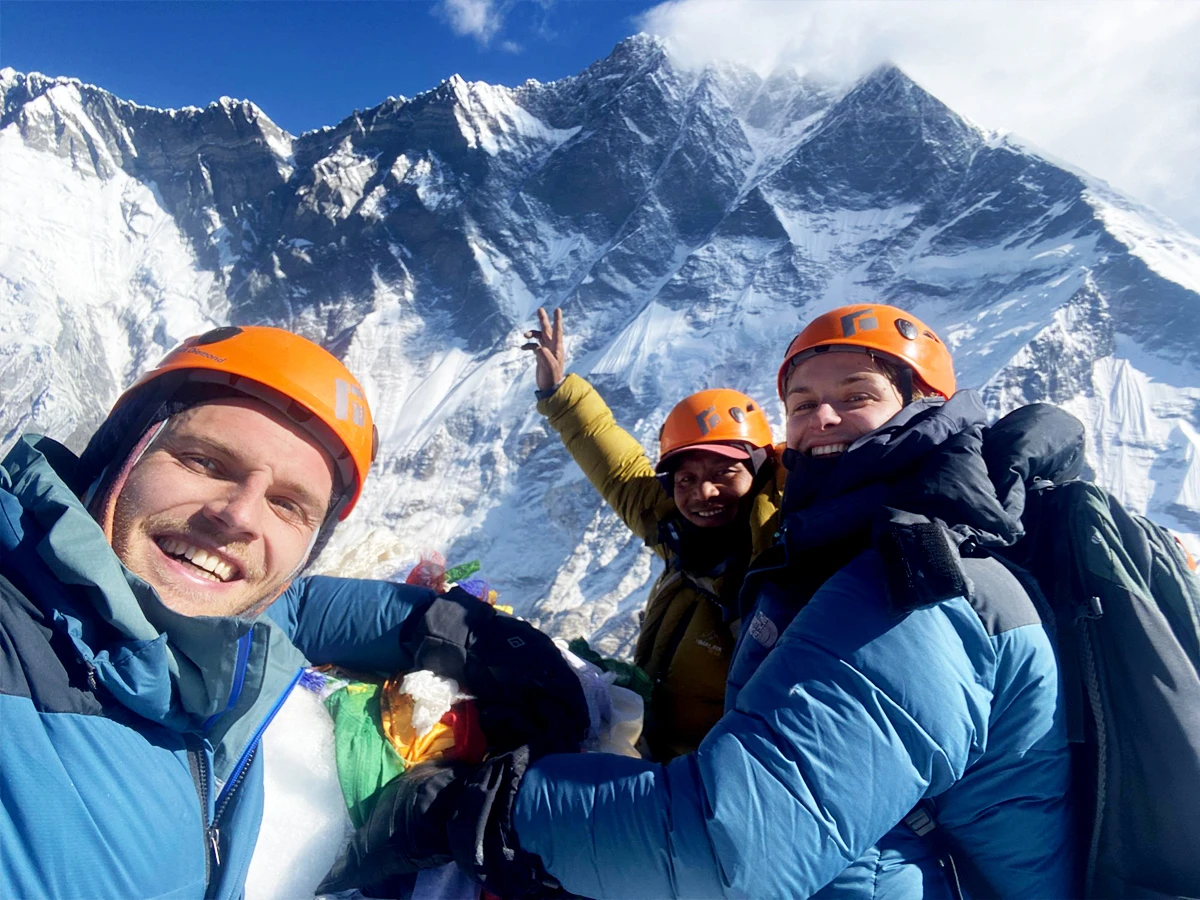
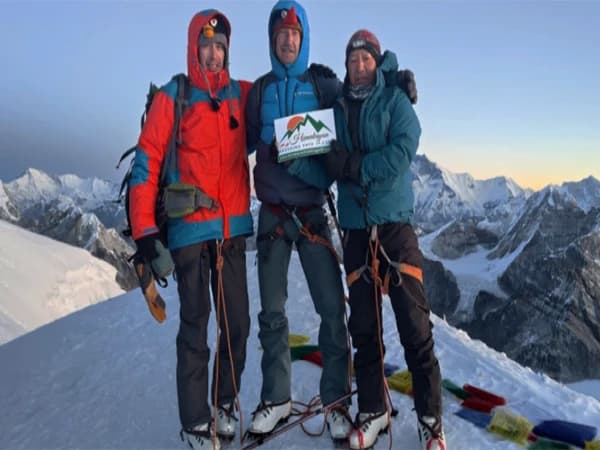
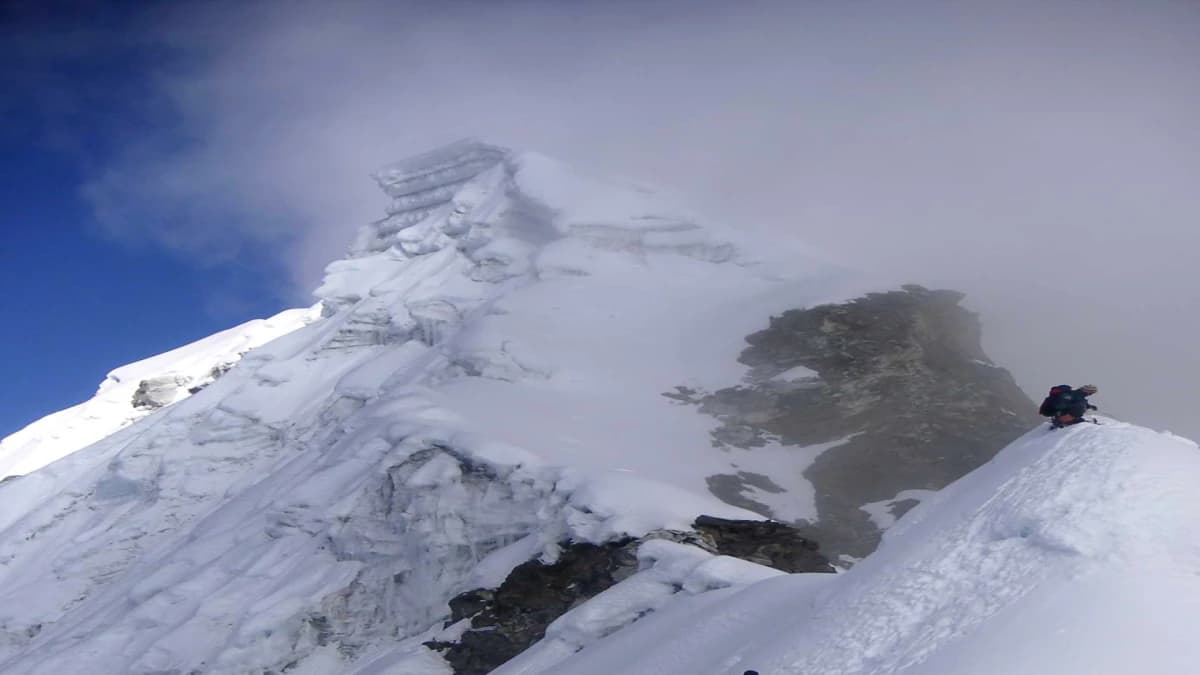
You’ll realize half of your lifelong dream today by conquering the Lobuche Summit. Gradually, we’ll overcome many technical difficulties and move closer to the top at a steady pace. Once we reach 6,119m asl, the highest point Mt. Lobuche; we’ll feel as if our endeavour is finally recognized by Mother Nature as we are rewarded with 3600 vistas. Feel the Himalayan grandeur i.e. bestowed upon us by the glittering ivory peaks. At long last, we’ll go backtrack to High Camp.

Today, we’ll make it past the Kongma La Pass (5,535m) to end up at Chhukung (4,730m).  Because of multiple precipitous ups and downs, the journey through this high pass is demanding and requires us to negotiate moraines from Khumbu glacier. Traditionally, Chhukung used to be a yak pasture with no permanent habitation but now it is a popular resting place for climbers going for Chhukung Ri and Imja Tse (Island Peak). Positioned in the lap of Himalayas, this serene village offers a pleasing view surrounding mountains with snowy tops as well as a comfortable place for an overnight stay to exhausted individuals.

For acclimatization purpose, we’ll set off for a short hike to Chukkung Ri (5,550m). It lies to the North of Chhukung Village and takes approximately 3-4 hours of strenuous effort. We won’t have any Everest sightings from Chukkung Ri; that’s the reason why this hiking route is a lot quieter than Gokyo Ri and Kala Patthar. Nevertheless, we’ll observe fantastic vistas encompassing Imja Tse, Cho Oyu, Pumori, Lhotse wall, Baruntse, Ama Dablam, Makalu, and Nuptse that we won’t get anywhere else in the entire planet. If you don’t prefer this acclimatization hike then you can rest in the teahouse at Chhukung.

We’ll take our steps deep into the Imja Valley this morning. Staring at the skyline dominated my graceful Ama Dablam; we’ll trek along the rugged path and get over several steep ascents passing by a lot many glacial moraines from Lhotse Glacier. We’ll now enter the sand flats at Pareshaya Gyab.  Continuing a little further, we’ll arrive at Island Peak Base camp (5,200m) at around the mid-afternoon.

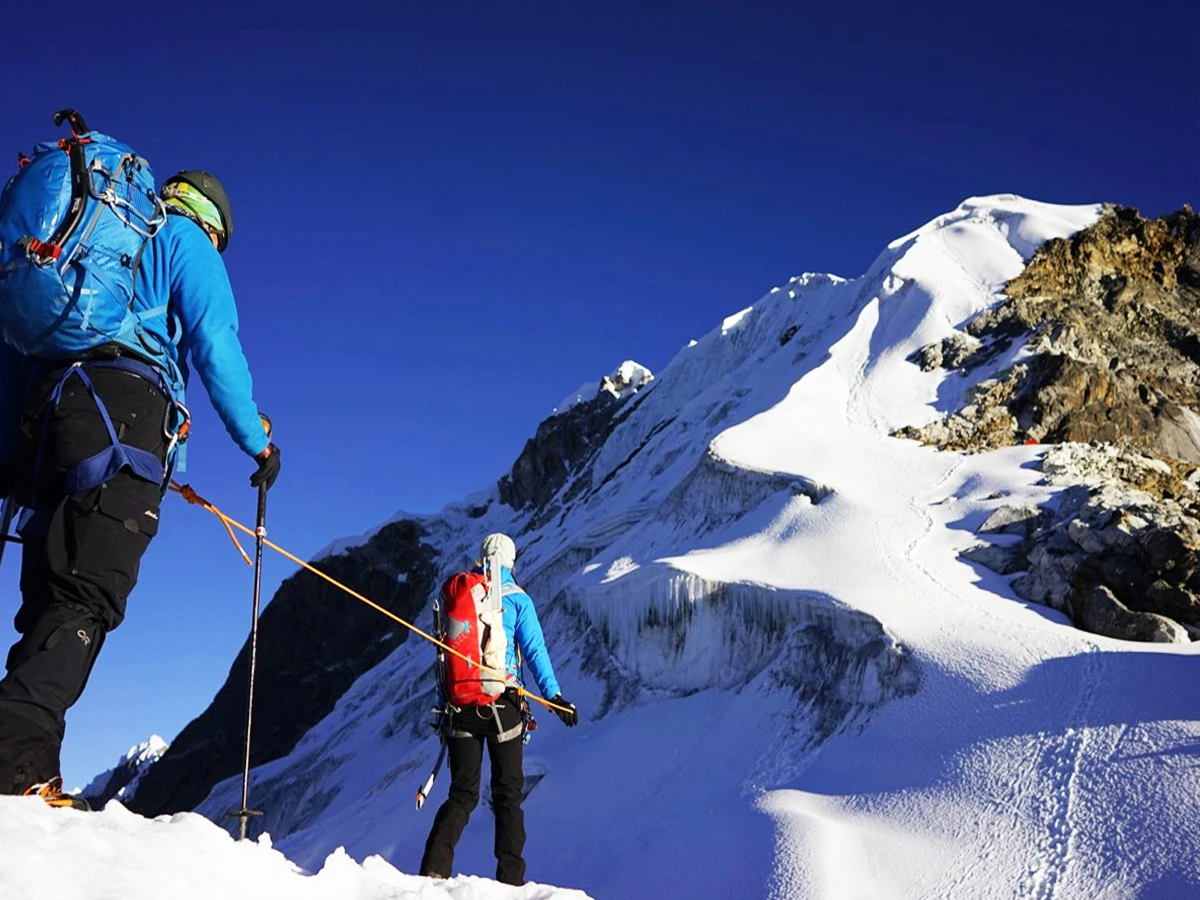
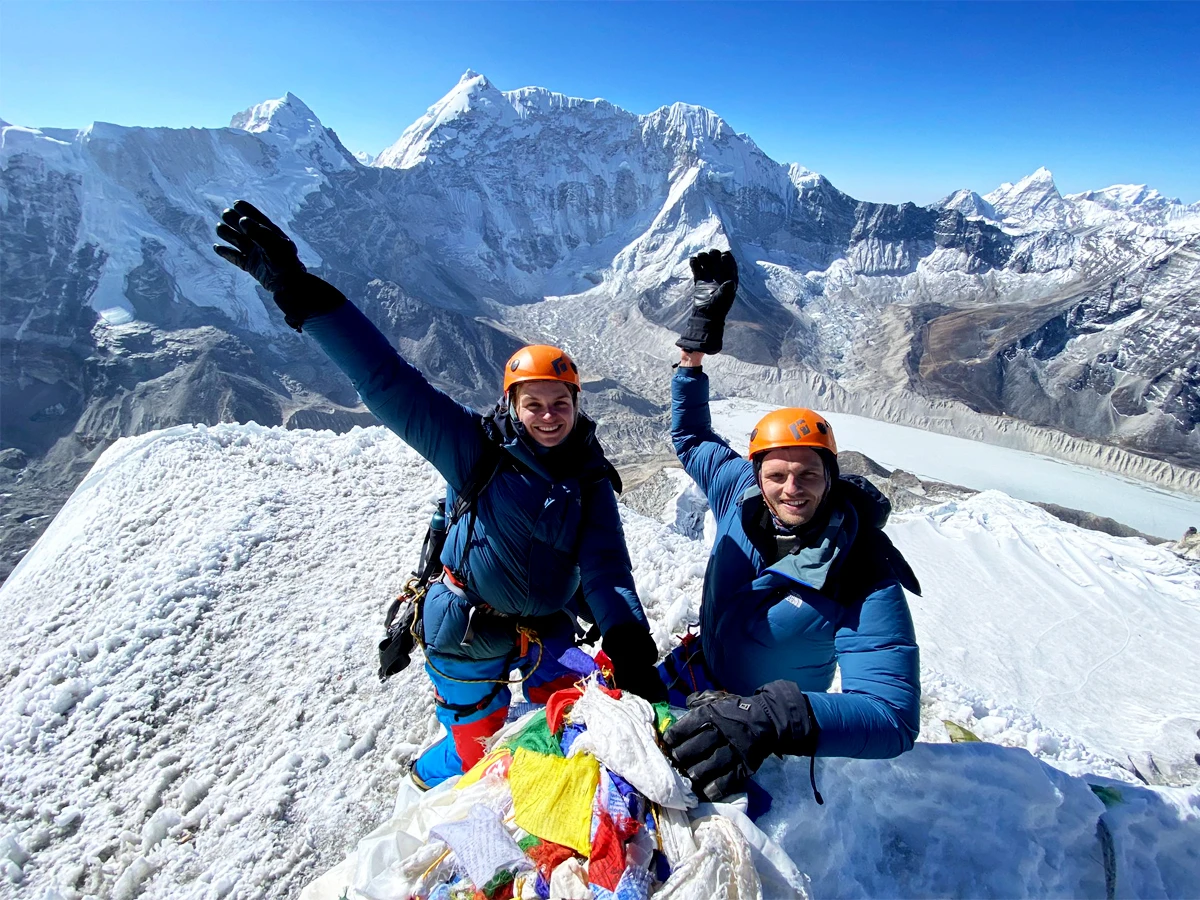
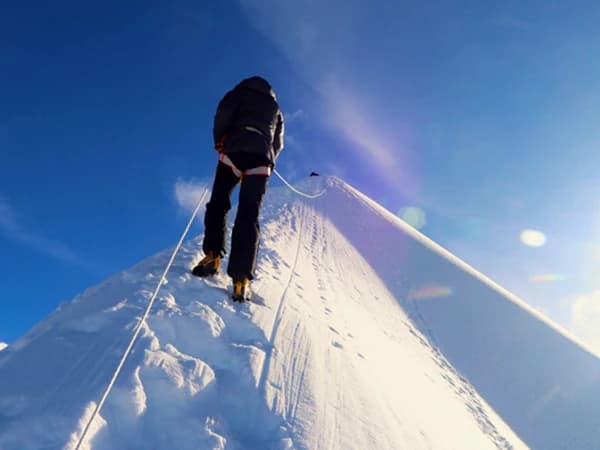
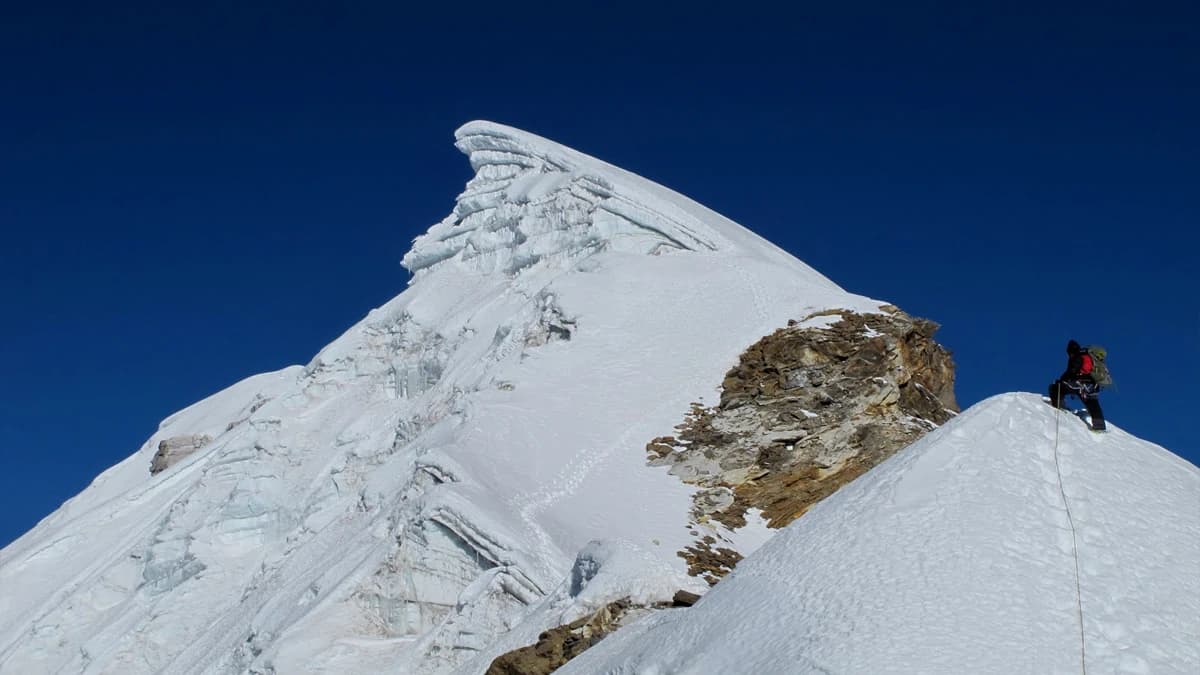
The strategy of the climb and its systematic execution rest upon the shoulders of climbing Sherpa leader who takes every group members as well as other inevitable factors such as climate and snow conditions into account while making the final decision. All said and done, we’ll commence our summit attempt with the aim to turn our ultimate fantasy into a reality that features a triumph over two Himalayan peaks at once (first one being the Lobuche East). Even though it is not a technically difficult peak to climb, the crevassed snow slopes and a fairly steep headwall presents a challenge to the climbers. Thus, we’ll fix ropes on the summit headwall for safety during both ascent and descent. Our willpower and stamina are tested to the limit as we proceed to the vertex (6,189asl) where we can gaze at the utterly sublime views of snow giants such as Ama Dablam, Lhotse, Makalu and Baruntse. Experience the feeling of great accomplishment that you just achieved! We’ll then descend back to base camp.

In case the conquest of Island Peak is delayed by furious natural elements, bad climate or deteriorating individual health; we’ll have this reserved day that allows us to re-attempt our ascent to the summit. We can reach the top in a single day presuming that the weather is good and clear but anything can happen in the high elevations; so, it is better to be prepared in order to counter the unwelcomed situations rather than regretting later for an unsuccessful escapade.

Succeeding the triumphant over the mighty mountains, we’ll climb down across moraines to Chhukung.  We’ll carry on our downward movement along Imja Khola to Bibre and meet up with the primary Everest trail. Afterwards, we’ll reach Dingboche then move downhill past the Sherpa villages to set our feet at Pangboche (3,985m).

We’ll resume our trek down the mountainous trail that guides us to Tengboche. If you have not visited the Tengboche Monastery, the largest in the Khumbu Region; then, now is your golden opportunity! Finding our delight in the mountain vistas of mountains and snowscapes along the way, we’ll progress beyond the dense forest, high suspension bridges and quaint settlements to make an appearance at Namche Bazaar.

Past the mani walls, prayer flags and rustic Sherpa villages, we’ll trek on the route alongside the Dudh Koshi River and retrace our steps to Lukla. A relatively easy day, you can repose and rest at the remaining time of the day. Get your mind lost in the reminiscence of the feat you have just pulled off!

From Lukla, you’ll go on broad of a flight destined to Kathmandu. With the last sightings of the snow-clad mountaintops, you’ll land up at the capital city. Here, relax in your hotel room. Or, have a walk around the vivid marketplaces to reward yourself with a fine Nepalese lunch or dinner. Don’t forget to buy yourself and your loved ones a souvenir from Nepal.

The day twenty-two marks the end of your adventures in this captivating South Asian nation enclosed by the planet’s highest mountains. We hope you are satisfied with our services and expect to see you again at the time of your next Nepal travel. One of our representatives will transport you to the Airport in a private vehicle three hours prior to your scheduled flight. Farewell! Cheers!!

Cost Details
Included
  • Airport pickup and drop-off services are arranged by Himalayan Trekking Path.
  • A welcome dinner will be hosted on the day of arrival, organized by Himalayan Trekking Path.
  • Round-trip flights between Kathmandu and Lukla are included in the package.
  • Guests will receive meals for 18 days, covering breakfast, lunch, and dinner.
  • One night of tent accommodation is provided during the climbing phase.
  • Enjoy three nights of deluxe hotel accommodation in Kathmandu, complete with complimentary breakfast.
  • A professional trekking guide will be assigned, ensuring a ratio of two guests per trekking porter.
  • Highly experienced climbing guides and support crews are available for assistance.
  • Trekking staff will receive food, lodging, salary, and insurance coverage.
  • Daily service of three tea or coffee servings is included.
  • Trekking and climbing permits (National Park, Local Permits, and Climbing Permits) 
  • Assistant cooks and transportation services are included, along with essential kitchen staff and camping gear.
  • Camping equipment is supplied, featuring utensils such as EPI Gus, gas or fuel stoves, cooking pots, mattresses, and walkie-talkies.
  • Staff salaries and allowances are fully covered, encompassing wages, equipment, food, clothing, and insurance for climbing personnel and porters.
  • High-quality accommodations are provided, including a North Face Dome Tent for two individuals and a wall or cabin tent designated for dining and kitchen use.
  • High camp lodging and meal services are available, offering three daily meals for both members and staff.
  • A selection of drinks and beverages is provided for climbers, including tea with cookies and hot drinking water.
  • Essential fixing gear is included, such as fixed ropes, main ropes, snow bars, ice crews, rock pitons, and arrangements for helicopter rescue or charter services.
  • All personal climbing gear is supplied, including climbing boots, crampons, ice axes or hammers, harnesses, jammers, karabiners, figure eights or ATC guides, tap slings, and various ropes and pitons.
  • Comprehensive support is ensured for a successful and safe climbing experience, with all necessary equipment and services readily available.
Excluded
  • Visa fees for Nepal are structured as follows: USD 30 for a 15-day stay, USD 50 for 30 days, and USD 125 for 90 days per individual.
  • International airfare is not part of the travel package and must be arranged independently.
  • It is recommended that travelers obtain insurance that covers both medical emergencies and rescue operations.
  • Essential gear includes a sleeping bag, down jackets, gloves, and water- and wind-resistant clothing such as climbing pants and jackets, as well as a flashlight.
  • In the event of unforeseen adverse weather, travelers should be prepared for potential additional days in their itinerary.
  • Certain amenities, including hot showers, drinking water, Wi-Fi, laundry services, and battery charging, may incur extra charges.
  • Personal expenses, including additional beverages and lost belongings, are not covered by the travel package.
  • Tipping is customary for drivers, porters, and guides as a gesture of appreciation.
  • Private transportation between Kathmandu and Ramechhap is available for USD 300 for a round trip in a Jeep.
  • Helicopter services sharing and private (USD400 to USD4000) 
  • NNMGA Guides are available at an extra cost. The cost per day 150$ to 200$ per guide
Dates & Availability
Starts:Mar 04, 2026Ends:Mar 25, 2026
PriceUS$3000
AvailabilityGuaranteed
Starts:Mar 05, 2026Ends:Mar 26, 2026
PriceUS$3000
AvailabilityGuaranteed
Starts:Mar 07, 2026Ends:Mar 28, 2026
PriceUS$3000
AvailabilityGuaranteed
Starts:Mar 08, 2026Ends:Mar 29, 2026
PriceUS$3000
AvailabilityGuaranteed
Starts:Mar 10, 2026Ends:Mar 31, 2026
PriceUS$3000
AvailabilityGuaranteed
Starts:Mar 12, 2026Ends:Apr 02, 2026
PriceUS$3000
AvailabilityGuaranteed
Starts:Mar 14, 2026Ends:Apr 04, 2026
PriceUS$3000
AvailabilityGuaranteed
Starts:Mar 16, 2026Ends:Apr 06, 2026
PriceUS$3000
AvailabilityGuaranteed
Starts:Mar 18, 2026Ends:Apr 08, 2026
PriceUS$3000
AvailabilityGuaranteed
Starts:Mar 20, 2026Ends:Apr 10, 2026
PriceUS$3000
AvailabilityGuaranteed
Starts:Mar 22, 2026Ends:Apr 12, 2026
PriceUS$3000
AvailabilityGuaranteed
Starts:Mar 24, 2026Ends:Apr 14, 2026
PriceUS$3000
AvailabilityGuaranteed
Starts:Mar 26, 2026Ends:Apr 16, 2026
PriceUS$3000
AvailabilityGuaranteed
Starts:Mar 28, 2026Ends:Apr 18, 2026
PriceUS$3000
AvailabilityGuaranteed
Starts:Mar 30, 2026Ends:Apr 20, 2026
PriceUS$3000
AvailabilityGuaranteed
Starts:Mar 31, 2026Ends:Apr 21, 2026
PriceUS$3000
AvailabilityGuaranteed

Lobuche Peak and Island Peak climbing are among the most exciting adventure plans for thrill-seekers, combining the classic Everest Base Camp route with challenging summit detours to both peaks. Himalayan Trekking Path offers convenient fixed departure dates for a smooth and well-organized experience. The prime seasons—Autumn (September to November) and Spring (March to May)—provide the best weather and climbing conditions, allowing you to book your adventure on any preferred date within these periods. Below are selected fixed departures to help you plan this unforgettable Himalayan climbing journey with confidence and flexibility.

FAQs

Lobuche (6,119m) and Island Peak (6,189m) are two of Nepal’s most iconic trekking peaks, offering stunning Himalayan views and rewarding alpine challenges. Their routes combine the classic Everest Base Camp trail with thrilling summit extensions. Climbers experience Sherpa culture, high-altitude trekking, glacier crossings, and basic mountaineering in one journey. Both peaks are achievable for fit trekkers with proper training and guidance, making the adventure perfect for those who dream of summiting 6,000-m peaks. The combination offers diverse terrain, beautiful landscapes, and excellent acclimatization. This dual-peak itinerary is ideal preparation for future 7,000-m and 8,000-m expeditions.

Previous climbing experience is helpful but not mandatory. Many first-time climbers successfully summit these peaks with proper training, fitness, and guidance. However, basic knowledge of mountaineering techniques—such as using crampons, ice axes, fixed ropes, and harnesses—will make the climb easier and safer. Island Peak involves a steep headwall and glacier travel, while Lobuche requires rock scrambling and fixed rope ascent. Your guides will provide pre-climb training at base camps. Good cardiovascular fitness, stamina, and mental readiness are essential. If you are new to mountaineering, consider practicing hiking with a weighted pack and learning basic rope skills beforehand.

Island Peak is generally considered slightly more technical due to its glacier walk, ladder crossings (depending on the season), and the steep snow/ice headwall near the summit ridge. Lobuche Peak also involves technical sections, including fixed rope climbing on rock and icy terrain, but it is shorter and less demanding in some parts. Both peaks require good fitness, proper acclimatization, and confidence with mountaineering equipment. Many climbers find Lobuche mentally easier but physically challenging, while Island Peak requires stronger technical skills. When done together, the earlier ascent of Lobuche helps prepare climbers for Island Peak’s final push.

The ideal seasons for climbing Lobuche and Island Peak are Autumn (September–November) and Spring (March–May). These months offer clear skies, stable weather, and excellent visibility of the Everest region. Autumn provides crisp air, vibrant landscapes, and ideal climbing temperatures after the monsoon. Spring brings warmer conditions, blooming rhododendrons, and great stability for high-altitude travel. Winter is extremely cold and risky, while the monsoon brings heavy rain and poor visibility. For the best success rate and mountain views, always plan your climb during the main seasons. Early booking is recommended due to high demand in peak months.

The combined itinerary is moderately to highly challenging, suitable for well-prepared trekkers aiming to progress into mountaineering. You will trek the Everest Base Camp route, reaching high altitudes above 5,000 meters, which demands good acclimatization and endurance. Both peaks involve steep sections, ropes, crampons, ice axes, and glacier travel. Daily trekking hours range from 5 to 9 hours, with summit days lasting up to 12 hours. Proper fitness, mental strength, and determination are essential. The itinerary is designed to build acclimatization during the EBC trek, helping climbers safely attempt Lobuche first and Island Peak afterward.

You will need climbing permits issued by the Nepal Mountaineering Association (NMA) for both Lobuche East and Island Peak. Additionally, you must obtain the Sagarmatha National Park Entrance Permit and the local Khumbu Pasang Lhamu Municipality Permit. These permits help regulate climbing activities, ensure safety, and support conservation. Your trekking company normally arranges all required permits before your trip. Carry passport copies, passport-sized photos, and insurance details for processing. Permit fees vary by season, with lower fees in winter and monsoon. Always trek with authorized paperwork to avoid delays or restrictions during your climbing adventure.

Himalayan Trekking Path provides essential climbing equipment, including ropes, ice screws, harnesses, carabiners, tents, crampons, and mountaineering boots. A duffel bag is also supplied for porter use during the expedition. However, personal equipment is not included in the package. Climbers are required to bring their own high-energy snacks, water purification tablets, headlamp with extra batteries, personal clothing layers, gloves, sunglasses, sunscreen, and other individual accessories needed for comfort and safety. We strongly recommend carefully reviewing the gear list in advance and testing all personal equipment before the climb to ensure proper fit, reliability, and overall comfort throughout the expedition.

The combined Lobuche and Island Peak itinerary typically ranges from 18 to 23 days, depending on acclimatization days and route variations. Most itineraries begin with the classic Everest Base Camp trek, followed by Lobuche Peak climbing, then continue toward Chukhung for the Island Peak attempt. Some climbers add an extra rest day between peaks to recover. Summit days require early morning starts and long hours. The total duration includes trekking, acclimatization, skill training, and return to Lukla. Choosing a flexible itinerary increases your success rate by allowing adjustments based on weather and altitude conditions.

Success rates are generally high—around 70–90%—for climbers who are well-acclimatized, physically prepared, and guided by experienced mountaineering professionals. Completing the Everest Base Camp trek beforehand significantly boosts your chances. Weather, altitude sickness, and physical exhaustion are the main reasons some climbers turn back. Climbing Lobuche before Island Peak further improves performance by enhancing acclimatization. With proper training, a well-planned itinerary, and professional guidance, most healthy trekkers can successfully summit both peaks. Booking during the main climbing seasons also increases the likelihood of favorable weather and stable climbing conditions.

Yes, beginners with strong physical fitness and determination can summit both Lobuche and Island Peak in a single itinerary. The Everest Base Camp trek provides gradual acclimatization, while climbing Lobuche first prepares climbers for Island Peak’s technical sections. Pre-trip training—including cardio, strength workouts, long hikes, and learning basic mountaineering skills—is highly recommended. Many first-time climbers succeed due to guided instruction, acclimatization, and professional support. However, beginners must be ready for long trekking days, cold weather, and exposure to high altitude. Good preparation and a positive mindset are essential for success.

Joining a guided group or fixed departure ensures safety, organization, and cost efficiency. Professional guides handle navigation, rope fixing, risk assessment, weather updates, and emergency management. Fixed departures allow climbers to share costs for porters, gear, and logistics. You also benefit from group motivation, set acclimatization schedules, and reliable support throughout the trek. Guided expeditions provide structured training sessions, high-quality equipment, and smooth coordination of permits, flights, and accommodations. For such high-altitude technical peaks, expert support greatly increases your summit success rate and enhances the overall experience.

The permit costs for Lobuche and Island Peak climbing include both national and local entry fees, along with individual peak permits. Sagarmatha National Park entry costs NPR 3,000, and the Pasang Lhamu Rural Municipality fee is NPR 3,000 per person. For climbing, the Lobuche Peak permit is USD 300 during the Spring season (March–May) and USD 175 in all other months. Similarly, the Island Peak climbing permit costs USD 300 in Spring and USD 175 during remaining seasons. These permits support conservation, safety, and regulated mountaineering in the Everest region.

There are three main ways to reach Lukla from Kathmandu. The most popular and convenient option is the Kathmandu–Lukla flight, which costs around USD 230 per person and offers a short, scenic journey. The second option is traveling overland via Salleri, which takes about two days and is a good choice during bad weather or flight delays. The third option is taking a helicopter, ideal for comfort and reliability, costing around USD 700 per person on a shared basis. Each option provides a unique experience depending on your budget, schedule, and travel preference.