Lobuche Peak Climbing-18 Days

Lobuche Peak
Lobuche Peak Climbing
At a Glance
Duration18 Days
Trip GradeStrenuous
i
CountryNepal
Maximum Altitude6119M
Group Size1 to 10 per group
StartsKathmandu
EndsKathmadnu
Travel StyleTrekking/Climbing
Best TimeSeptember to November and March to May

Lobuche Peak Climbing 

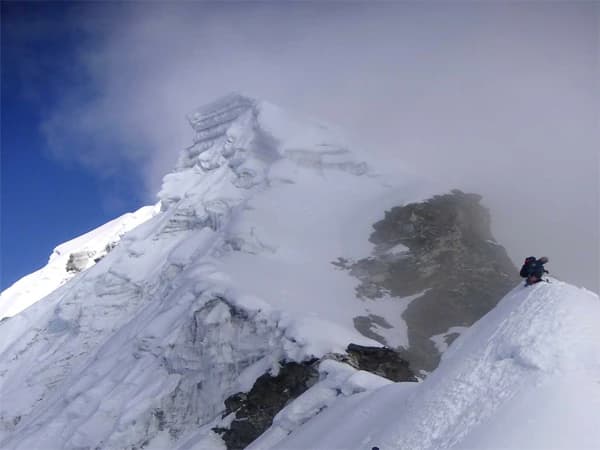
Lobuche Peak climbing is an ideal peak to climb, located in the Khumbu Region, and is renowned for its climbing opportunities. At an impressive height of 6119m above sea level, Lobuche East offers a relatively straightforward ascent compared to other peaks in the area. As a designated "trekking peak," it necessitates physical fitness and mountain knowledge rather than advanced technical climbing skills. Due to its accessibility and moderate difficulty level, it is often suggested as an ideal choice for climbers venturing into Himalayan peak climbing for the first time.

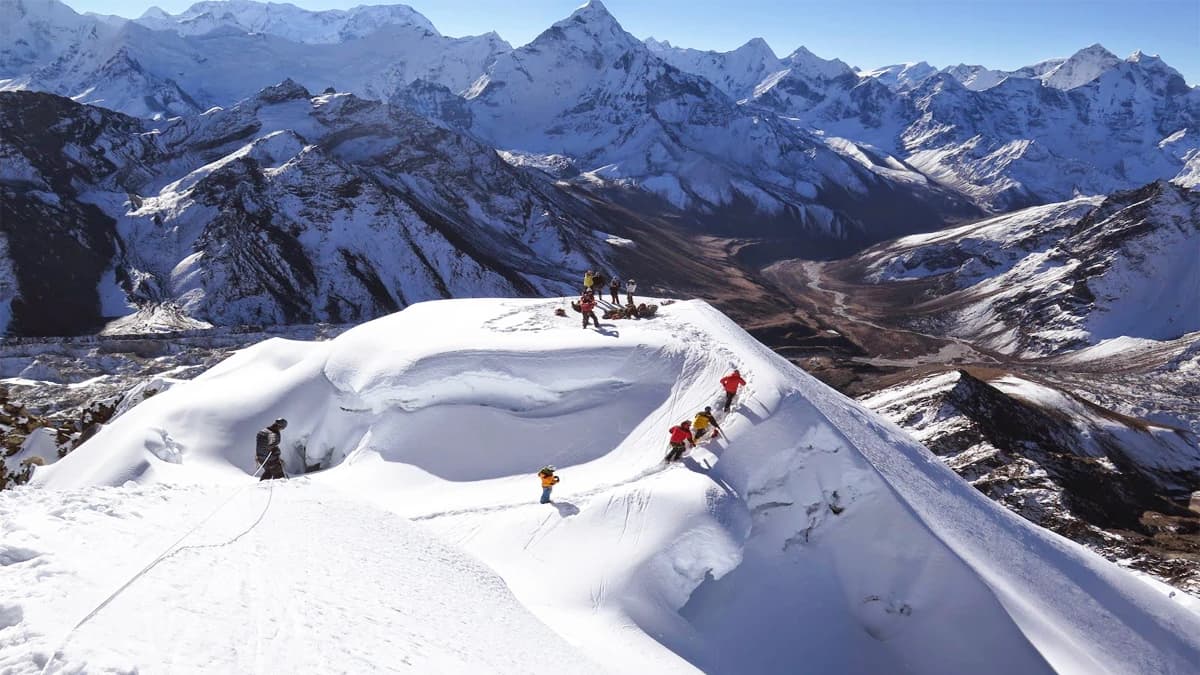
If you are yearning for a true adventure in your life, embark on the conquest of Lobuche Peak and ascend to its snowy summit to witness breathtaking 360-degree panoramic views of majestic, snow-covered peaks. Lobuche Peak offers a thrilling mountaineering experience with multiple established routes to its summit, as well as the potential for new ones. It consists of two distinct peaks, Lobuche East (6,119m) and Lobuche West (6,145m), connected by a continuous ridge with a significant gap between them. To trek to Lobuche West, you will need an expedition permit from the Nepali government. However, with just a climbing permit from the Nepal Mountain Association (NMA), you can conquer the East Peak. By joining our Lobuche Peak Climbing Package, you will have the opportunity to stand atop the East Peak and be mesmerized by the awe-inspiring views of snow-clad giants such as Everest, Ama Dablam, Thamserku, Lhotse, and Nuptse. Additionally, the close-up sight of the Khumbu Glacier will leave you in awe of the majestic beauty of Mother Nature.

Highlights:

  • Discover the wonders of Kathmandu before embarking on the thrilling Lobuche Peak Climbing adventure
  • Experience the breathtaking aerial flight between Kathmandu and Lukla, a gateway to the Everest region
  • Embark on an unforgettable trek into the heart of the Everest region and Sagarmatha National Park
  • Immerse yourself in the enchanting flora and fauna of the region, witnessing its exotic beauty
  • Trek to the renowned Everest Base Camp and marvel at the majestic Kalapather vantage point before conquering Lobuche Peak
  • Enjoy a panoramic view of several magnificent mountains, including the awe-inspiring Everest (8,848m)
  • Admire the towering peaks of Lhotse (8,516m), Nuptse (7,861m), Pumori (7,161m), Ama Dablam (6,812m), and Cholatse (6,440m)
  • Indulge in the local hospitality by staying at charming tea houses and immersing yourself in the rich Sherpa culture
  • Immerse yourself in the warm and welcoming atmosphere of the local tea houses, offering a glimpse into the Sherpa way of life
  • Experience the unique traditions and customs of the Sherpa people, adding a cultural dimension to your adventure.

Lobuche East Peak Climbing Overview:

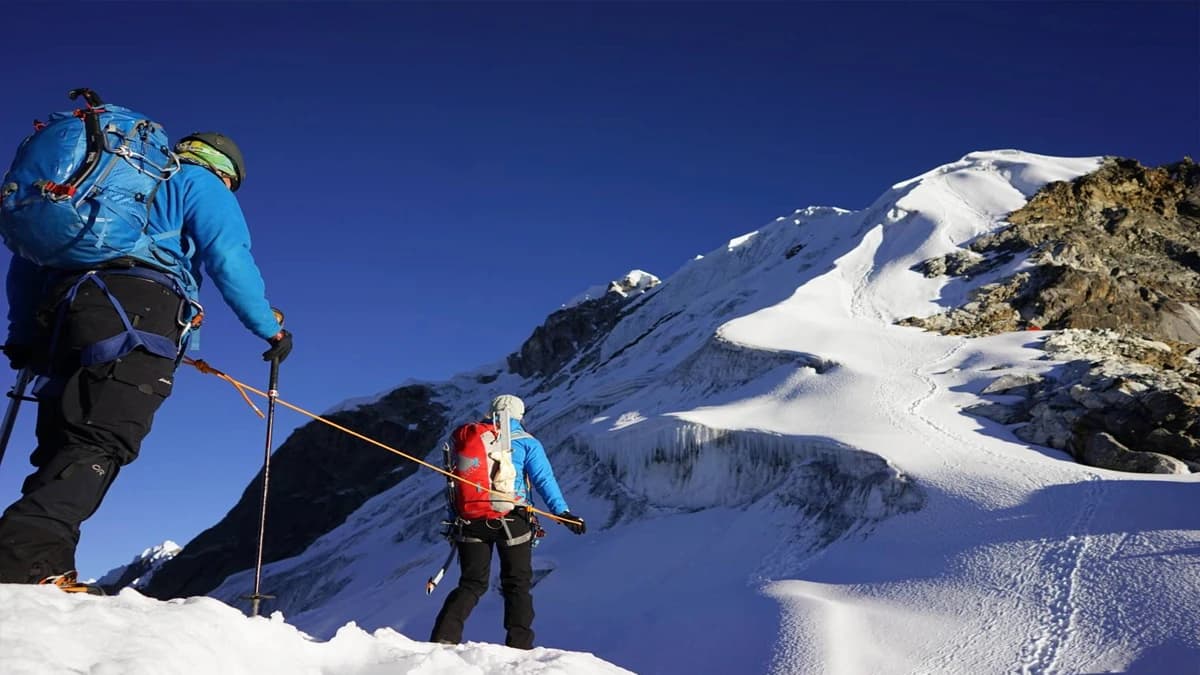
Lobuche East Peak Climbing is one of Nepal’s most popular trekking peaks, ideal for trekkers aiming to step into alpine mountaineering. Standing at 6,119 meters, it offers a thrilling combination of technical sections, glacier walks, and panoramic Himalayan views. The journey follows the classic Everest Base Camp trail, allowing climbers to acclimatize while exploring iconic destinations like EBC, Kala Patthar, and Khumbu Glacier. Lobuche East is known for its challenging yet achievable summit, making it a top choice for climbers preparing for higher peaks such as Island Peak, Ama Dablam, or even Everest. The climb involves fixed ropes, crampons, ice axe use, and steep snow slopes, providing an authentic mountaineering experience. From the summit, adventurers enjoy breathtaking views of Everest, Lhotse, Nuptse, Ama Dablam, Pumori, and Makalu. With professional guides, proper acclimatization, and safe logistics, Lobuche East offers one of the best high-altitude adventures in the Everest region.

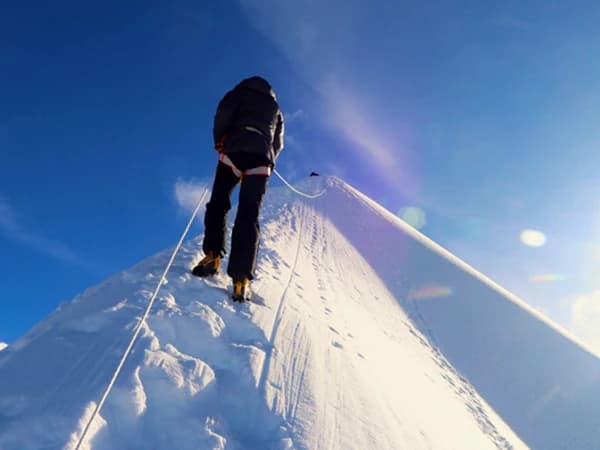
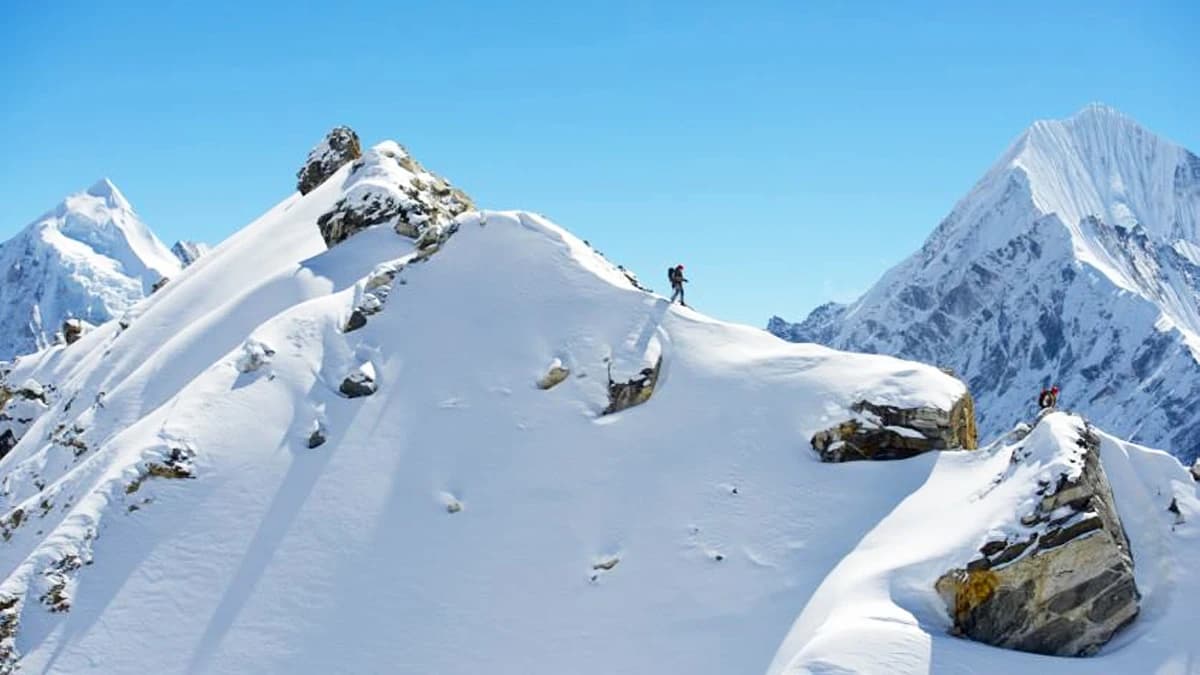
During our Lobuche Peak Climbing Adventure, climbers usually ascend to a subsidiary snow summit known as the false peak before reaching the true summit on the summit ridge. Following a descent into a marked notch, you will then climb steep, snowy slopes to reach the actual peak of Lobuche East. Moreover, you will have the privilege of standing at the base of the tallest mountain on Earth, Mount Everest, and enjoying stunning views of the majestic peak from the elevation of 5,545m at Kala Patthar, an ideal spot for witnessing Mt. Everest. Climbing at Lobuche Peak is a challenging endeavor that requires technical expertise and previous experience in mountain climbing. Individuals seeking to conquer this Himalayan giant must be prepared to navigate steep, snow-covered trails in hostile environments. If you're ready to test your skills in the mighty Himalayas, get in touch with us to secure your spot on this action-packed trip!

Lobuche Peak Via Island Peak Via Mera Peak

Climbing Mera Peak, Island Peak, and Lobuche East in a single expedition is one of Nepal’s most demanding and rewarding alpine adventures. This ultimate Himalayan trilogy takes climbers from the remote Hinku Valley to the heart of the Everest region, summiting three iconic peaks over 6,000 meters. The journey begins with Mera Peak (6,476m), the highest trekking peak, ideal for building confidence and acclimatization. Next comes Island Peak (6,189m), where climbers tackle steeper ascents, glacier crossings, and fixed ropes. Finally, the expedition concludes with Lobuche East (6,119m), offering technical rock, ice, and snow sections along with unbeatable views of Everest, Lhotse, and Ama Dablam. This combination route is perfect for ambitious climbers aiming to evolve their high-altitude skills and experience diverse Himalayan terrains. With expert guides, proper acclimatization, and strong teamwork, this three-peak adventure delivers the ultimate challenge and one of Nepal’s most unforgettable mountaineering experiences.

Best Season for Lobuche Peak Climbing

The best season for Lobuche Peak Climbing is during spring (March to May) and autumn (September to November), when weather conditions in the Everest region are stable, clear, and ideal for high-altitude mountaineering. Spring offers warmer temperatures, longer daylight hours, and excellent visibility, making it perfect for safe climbing and enjoying panoramic views of Everest, Lhotse, Nuptse, Ama Dablam, and Pumori. This season also provides firm snow conditions and fewer weather disruptions. Autumn is equally popular, known for its crisp skies, dry trails, and predictable climate after the monsoon. The air is clear, offering stunning Himalayan scenery and comfortable trekking conditions. Both seasons support better acclimatization, safer summit pushes, and reliable logistics. Winter and monsoon are not recommended due to heavy snowfall, extreme cold, and unstable weather. For the best success rate, safety, and breathtaking views, choosing spring or autumn is ideal for Lobuche Peak Climbing.

How to Prepare for Lobuche Peak Climbing?

Preparing for Lobuche Peak Climbing requires a combination of physical training, technical skills, proper gear, and smart acclimatization. Begin conditioning at least 8–12 weeks earlier with cardio exercises like hiking, running, cycling, and stair climbing to build endurance. Strength training for legs, core, and shoulders is equally important for handling steep ascents and carrying your backpack. Practice using mountaineering gear such as crampons, ice axe, harness, and fixed ropes, as these skills are essential on the glacier and summit ridge. Prior trekking experience above 4,000 meters greatly improves your success rate. Pack high-quality clothing, climbing boots, gloves, and layered insulation suitable for extreme cold. Follow a well-planned itinerary that allows proper acclimatization, especially if combined with Everest Base Camp or Kala Patthar. Hiring a certified guide ensures safety, route navigation, and correct rope techniques. With strong fitness, proper skills, and reliable logistics, climbers can confidently summit Lobuche Peak.

Lobuche Peak Climbing Permits and Cost

To climb Lobuche East, you must obtain a climbing permit issued by the Nepal Mountaineering Association (NMA), along with the Sagarmatha National Park Permit and Khumbu Pasang Lhamu Rural Municipality Permit. The NMA climbing permit cost varies by season: USD 300 in spring, USD 175 in autumn, and USD 175 in winter and summer. The national park entry fee is NPR 3,000, and the local municipality fee is NPR 3,000 per person. Himalayan Trekking Path Pvt. Ltd arranges all permits on your behalf, ensuring a smooth and hassle-free climbing experience.

Lobuche Peak Climbing Cost for 2025-2026

The price for climbing Lobuche Peak is influenced by various factors, including the inclusions of the package and the level of adventure sought during the expedition. Additionally, it is affected by the size of the group, the quality of gear, the expertise of the guide, logistical arrangements, and safety protocols. At Himalayan Trekking Path, a local company, we provide well-structured packages at competitive rates ranging from USD 2200 to USD 2700 per person, depending on the group size. The Khumbu Region is home to majestic peaks such as Everest, Lhotse, Makalu, and Cho Oyu, all of which rise above 8000 meters, along with numerous other summits exceeding 6000 and 7000 meters. Among these iconic climbing locations, Lobuche Peak is a favored option, following Mera and Island Peaks in popularity within the Everest region. The Lobuche East Peak Climb is rated Grade PD+ on the Alpine Grading System, reflecting its technical challenges. Ascending these slopes requires the use of harnesses and crampons. Our Lobuche Peak Climbing package provides a thorough experience, which includes a guide, sherpa or porter, mountain cuisine, lodging, trekking and climbing permits, climbing gear, and domestic flights. The cost of the package varies based on group size, with more economical rates for larger groups. The cost breakdown per group size is as follows:

  • The cost for solo climbers to undertake the Lobuche Peak Climbing Expedition is USD 2700.
  • For a group of 2 to 6 people, the cost per person for Lobuche Peak Climbing is USD 2400.
  • If you have a larger group of 7 to 10 individuals, the cost per person for Lobuche Peak Climbing is USD 2200.
Itinerary
Tour PlanExpand All

Upon your arrival at Kathmandu Airport, you’ll come across one of our representatives waiting to guide you through the bustling streets of Kathmandu City via a private vehicle. During this initial drive, you’ll be subjected to a culture shock from the first-hand experience of this Himalayan nation. Following the check-in, you can freshen up and repose in your room, enjoying the amenities offered by your hostel. Or, head out to observe the prominent landmarks and monuments of this culturally rich city. At the end of the day, take a walk around the vibrant Thamel Bazaar, aka the tourist hub, to revel in its delightful atmosphere.

Max. Altitude: 1350m/4429.13ftMeal: N/AAccommodation: Hotel

This morning, we’ll step aboard a domestic flight destined for one of the world's most extreme airports. But in the course of this 35-minute scenic flight, you can take a look at the terraced fields, valleys, sparkling rivers, sublime snowscapes and lofty summits below. After a dramatic landing at Lukla Airport, we’ll start off our trekking venture and then advance on the well-marked trail across the rugged terrain. Along the left bank of the untamed Dudh Koshi River, we’ll continue through the picturesque landscape; past the monasteries, Mani stones, prayer flags, and Sherpa villages of Chheplung (2,660m), Thado Koshigoan (2,580m) and Nuring (2,492 m) to reach Phakding (2,652m).

Max. Altitude: 2610mMeal: Breakfast, Lunch & DinnerAccommodation: Lodge

Today, the trekking route progress through many suspension bridges above the Dudh Koshi River; crossing and re-crossing this large natural stream several times. As we walk beyond the rustic Sherpa villages like Zapute, Toktok, Benkar and Chhamuwa as well as the dense forest of pine, fir, and rhododendron, we’ll arrive at Monjo (2,835m). We need to display our permits at the checkpoint situated here. Moving uphill to the other side of Jorsalle (2,740m), we’ll witness Kongde Ri (6,187m) at a distance then traverse seductive woodland within Sagarmatha National Park (a UNESCO natural world heritage site since 1979). We’ll now cross a high suspension bridge to make a precipitous ascent to Namche Bazaar. In clear weather, we catch the first sight of Mt. Everest looming in between Nuptse and Lhotse.

Max. Altitude: 3440mMeal: Breakfast, Lunch, & DinnerAccommodation: Lodge

Often known as “Sherpa capital” or “Gateway to Mt. Everest”; Namche Bazaar at 3,440m asl is a prosperous Sherpa town that provides an excellent place to trekkers for acclimatization purposes. The process of acclimatization carries a great significance for the individuals going towards higher elevations where the levels of oxygen are quite low. Greater the altitudes, more the human body is susceptible to Acute Altitude Sickness (AMS), which ultimately results in death. While adjusting to the mountainous environment, you can perceive the lifestyle of Sherpa natives as well as their culture and traditions. For that, you may explore the town and pay a visit to Sagarmatha National Park Visitor Centre or Sherpa Museum.

Max. Altitude: 3440mMeal: Breakfast, Lunch, & DinnerAccommodation: Lodge

Leaving Namche, we’ll follow the well-worn trail that contours around the valley side high above the Dudh Koshi River. En route, we’ll get the splendid outlooks of snow-clad peaks including Ama Dablam, Nuptse, Lhotse, and Everest. Progressing further into Dudh Koshi Valley, we’ll make it to Phungki Thanka (3,260m). Afterwards, we’ll pass by numerous small tea shops then range over the Dudh Koshi River and steeply ascend to Tengboche (3,870m). Explore the Tengboche Monastery and witness its magnificence. In addition, try out the delicious cake at the Tengboche Bakery. At the height of the tourist season, it is indeed a busy place!!

Max. Altitude: 3870mMeal: Breakfast, Lunch, & DinnerAccommodation: Lodge

This day, we’ll drop down to the river and stay with the rough path to the Deboche (3,820m). Covered by rhododendron woods, the trail traverses a suspension bridge over Imja Khola then continues further to Pangboche (3,900m). Revel in the heavenly vistas of Mt. Ama Dablam, Mt. Lhotse and other adjacent peaks. Keeping on with the trek, we’ll re-cross the river turn up at Imja Valley. Subsequently, we’ll emerge at Dingboche (4,410m). From here, we’ll take a long walk up above the valley to Pheriche (4,240m). You’ll find an HRA health post staffed by foreign and Nepalese doctors where you’ll attend a seminar about high altitude acclimatization.

Max. Altitude: 4240mMeal: Breakfast, Lunch, & DinnerAccommodation: Lodge

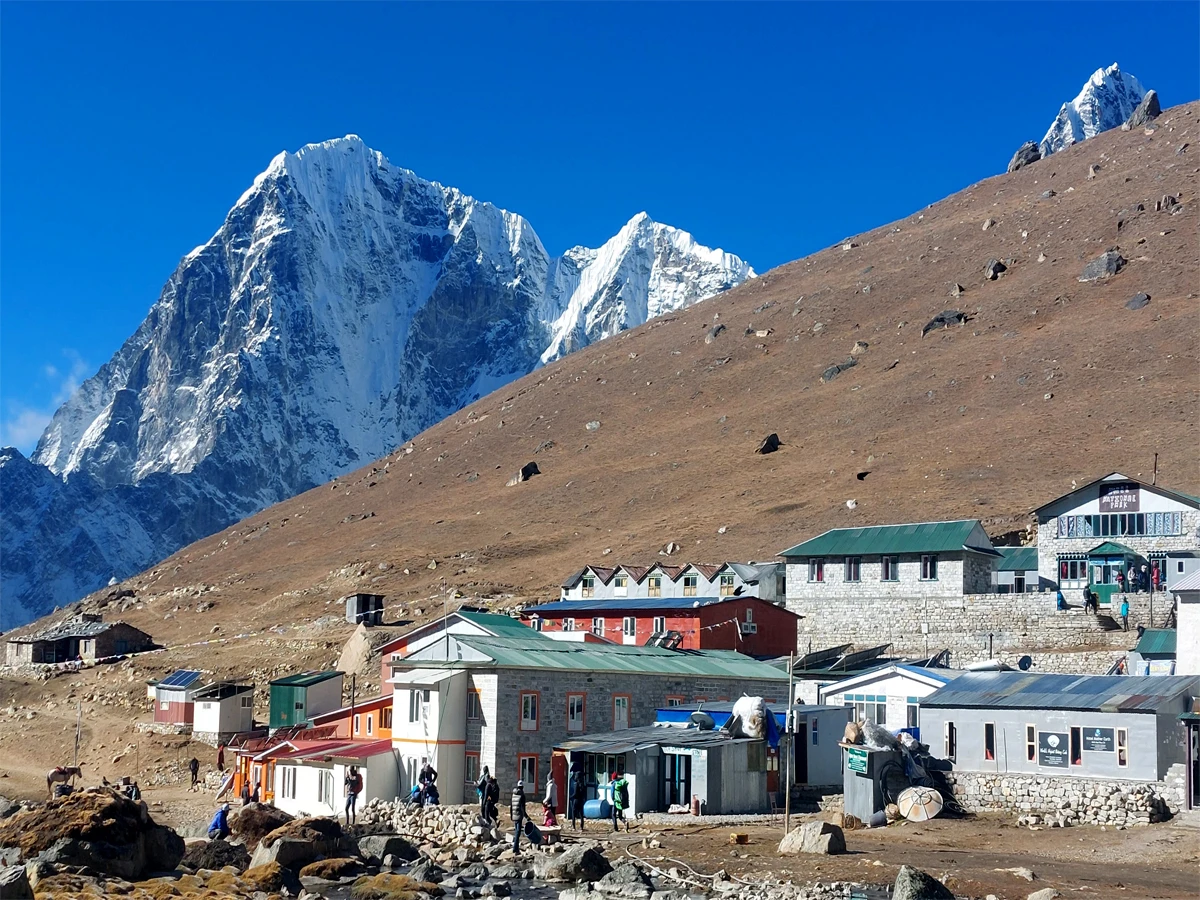
With a pleasant uphill walk, we’ll gradually get to Dughla (4,620m). From this point onwards, the pathway begins to climb abruptly alongside the glacial moraine. Accompanied by snow-capped mountains which now appear in close proximity, we’ll move along the beaten track to Lobuche (4,940m), a small settlement comprising a bunch of teahouses. We’ll stay here overnight and carry on with the progressive acclimatization.

Max. Altitude: 4940mMeal: Breakfast, Lunch, & DinnerAccommodation: Lodge

With our backpack ready and shoelaces tighten, we’ll resume our trek and ascend on an upward slope following the craggy route that comprises a plentiful of glacial moraines (mass of rocks and sediment carried down and deposited by a glacier). We’ll find pleasure in the magnificent vistas of glacial ponds and icebergs down below the Khumbu Glacier as we advance further. Despite difficulties presented by the high elevations and exhausting climb; we'll overcome the last of the rocky moraine dunes then move downhill to Gorakshep (5,180m). Thereafter, we’ll keep moving up the rocky path that twist and turn along the Khumbu glacier to Everest Base Camp (5,364m). We’ll return to Gorakshep after we spend a wonderful time here praising the marvellous Khumbu glacier and icefall. 

Max. Altitude: 5364mMeal: Breakfast, Lunch, & DinnerAccommodation: Lodge

Prior to break of the day, we’ll make an ascent to the top of Kala Patthar. Acclaimed as one of best Everest viewpoint in existence, we’ll observe a mesmerizing moment when the sun slowly rises and illuminate the snowy landscape ending the hours of darkness. Capturing this pleasant outlook in our mind and cameras, we’ll retrace our steps back to Gorakshep then steadily descend through Lobuche Pass (5,110m) to arrive at Lobuche (4,940m).

Max. Altitude: 4940mMeal: Breakfast, Lunch, & DinnerAccommodation: Lodge

In Day 10, we’ll carry out a relatively short uphill hike to Lobuche Base Camp (4,865m). The trail initially consists of a moderate incline but quickly turn out to be rocky and precipitous as we reach Lobuche Glacier. We can contemplate the panorama which includes snowy mountaintops of Ama Dablam, Lhotse, Nuptse, Everest, Cholatse, Pumori and Tawache. Rest of the day, you’ll have pre-climbing training provided by a climbing guide during which you’ll learn peak climbing techniques and operation of climbing gears.

Max. Altitude: 4950mMeal: Breakfast, Lunch, & DinnerAccommodation: Tent

We’ll ascend to Lobuche High Camp (5,600m) early in the morning so that we can have enough time to rehydrate and prepare for an ascent on Lobuche the next day. The lovely high Himalayan sunset views will make our stay at Lobuche High Camp comforting and blissful.

Max. Altitude: 5600mMeal: Breakfast, Lunch, & DinnerAccommodation: Tent

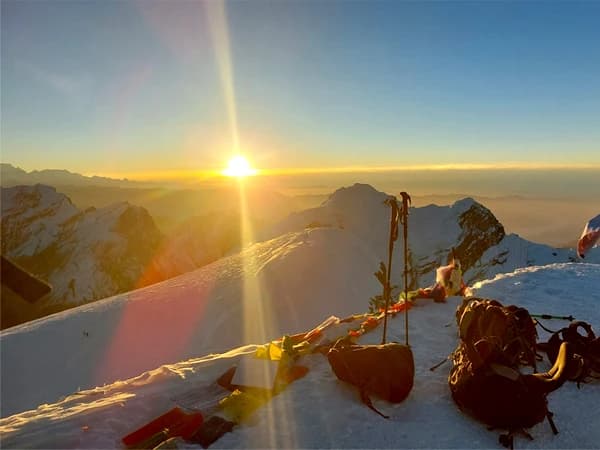
It is the day when you’ll drive your fantasy into the real world. Before the appearance of the daylight, we’ll execute a strenuous attempt to the apex. For a successful summit ascend we are required to advance to our ultimate goal at a slow yet steady pace. At the elevation of 6,119m asl, you’ll be surrounded by the incredible Himalayan panorama, the one that truly rewards the back-breaking journey to the summit. We’ll eventually move back to Lobuche High Camp (4,865m).

Max. Altitude: 4940mMeal: Breakfast, Lunch, & DinnerAccommodation: Lodge

We should always be preparing for the worst case scenario! If we couldn’t make it to the summit on day 14 as planned due to bad weather conditions or any other reasons then we can try again in day 15, which is allocated as the reserve day. The terrain and weather in the Himalayas are unforgiving; thus, this reserve day prevents our efforts to go in vain by bestowing a second chance to conquer the Mt. Lobuche East. Given that the weather is quite unfavourable, it is wise to put off our endeavour to set our feet at the highest point of the mountain. 

Max. Altitude: 4950mMeal: Breakfast, lunch, & DinnerAccommodation: Lodge

The conquest of Lobuche will undoubtedly render you the joy that will steer you down the path to Pangboche (3,930m). It is evident that the very exhilaration will make your descent easy! We’ll backtrack to Pheriche, navigate via Pheriche Pass (4,270m) and continue alongside the Imja Khola (a tributary of Dudh Koshi River) to Pangboche (3,930m) passing by teahouses as well as the Sherpa settlements of Somare and Orsho.

Max. Altitude: 3930mMeal: Breakfast, Lunch, & DinnerAccommodation: Lodge

We’ll recommence our downward climb by the side of Dudh Koshi River in day 17 of our escapade. Past Tengboche (3,860m) and Pungki Thanka (3,260m), we’ll encounter a steep descent to Kyangjuma (3,550m). From this point onwards, the route to Namche comes to be fairly easy. On the way, we’ll see the exquisite vistas of Ama Dablam, Lhotse Shar, Taboche, Kangtega, and Thamserku.

Max. Altitude: 3440mMeal: Breakfast, Lunch, DinnerAccommodation: Lodge

Beyond the Sherpa settlements, verdant terrain, suspension bridges, monasteries, and mani walls, we’ll proceed down all the way to Lukla (2,800m). Today marks the end of your adventure to the mountains; so, relax and let your body recharge its batteries.

Max. Altitude: 2868mMeal: Breakfast, lunch, DinnerAccommodation: Lodge

We’ll take a 30 minutes flight back to Kathmandu. The views of the countryside and snow-clad mountaintops below seem to be amazing as always. Once at Kathmandu, you may travel through some striking marketplaces to purchase some souvenirs or rest in your living space at the hotel.

Max. Altitude: 1350mMeal: BreakfastAccommodation: Hotel

We enjoy your stay with us and hope the mutual feeling from your side if you are fully satisfied with our services and hospitality. Either you can explore more of Nepal; we are there to aid you! Or, you can fly back to your home. One of our representatives will transport you to the airport three hours earlier than your scheduled flight. Cheers!!

Max. Altitude: 1350mMeal: BreakfastAccommodation: N/A
Cost Details
Included
  • Transportation for airport pickups and drops provided by Himalayan Trekking Path
  • Welcome Dinner upon arrival day, organized by Himalayan Trekking Path
  • Flights from Kathmandu to Lukla and Lukla to Kathmandu included
  • 14 days of meals provided, including lunch, dinner, and breakfast
  • Accommodation for 1 night in a Tent
  • 2 nights of deluxe accommodation in a hotel in Kathmandu with free breakfast
  • A professional trekking guide is provided, with a ratio of 2 guests to 1 Trekking Porter
  •  Highly skilled climbing guides and crews are available
  • Trekking staff provided with food, accommodations, salary, and insurance
  •  Daily provision of 3 tea/coffee servings
  • Trekking Permits and Climbing Permits are provided
  •  Assistant cook and transportation are available, along with necessary kitchen helpers and camping equipment
  • Camping Equipment: Utensils provided, including EPI Gas, gas stove or fuel stove, cooking pots, mattress, walkie-talkie, etc.
  • Staff salary and allowance covered, including wages, equipment, food, clothing, and insurance for climbing staff and porters
  • High Altitude Tents are provided, including North Face Dome Tent for two pax, wall/cabin tent for dining and kitchen, etc.
  • High Camp Lodging & food service are provided, including three meals a day for members and staff
  • Drinks and Beverages for climbing provided, including tea with cookies and hot drinking water
  • Fixing Gear provided, including fix rope, main rope, snow bar, ice crew, rock pitons, as well as Heli rescue/charter arrangement
  • All Personal gear is provided, including climbing boots, crampons, an ice axe or hammer, harness, jammers, karabiners, figure eight/ATC guide, tap sling, fix rope, main rope, snow bar, an ice crew, rock pitons, etc.
Excluded
  • The visa fees for Nepal are USD 30 for 15 days, USD 50 for 30 days, and USD 125 for 90 days per person.
  • International airfare is not included in the travel package and needs to be arranged separately.
  • Visitors are advised to have travel and medical insurance for their safety.
  • In cases of unexpected bad weather conditions, extra days may be required and should be planned accordingly.
  • Some amenities, such as hot showers, drinking water, WIFI, laundry, and batteries, may come at an additional cost.
  • Personal expenses, extra drinks, and lost items are not included in the travel package.
  • It is customary to give tips to your driver, porter, and guide.
  • Helicopter servcie 
  • All kinds of trekking gear
Dates & Availability
Starts:Feb 15, 2026Ends:Mar 04, 2026
PriceUS$2400
AvailabilityGuaranteed
Starts:Feb 17, 2026Ends:Mar 06, 2026
PriceUS$2400
AvailabilityGuaranteed
Starts:Feb 20, 2026Ends:Mar 09, 2026
PriceUS$2400
AvailabilityGuaranteed
Starts:Feb 24, 2026Ends:Mar 13, 2026
PriceUS$2400
AvailabilityGuaranteed
Starts:Feb 26, 2026Ends:Mar 15, 2026
PriceUS$2400
AvailabilityGuaranteed
Starts:Feb 28, 2026Ends:Mar 17, 2026
PriceUS$2400
AvailabilityGuaranteed

Lobuche Peak Climbing is one of the most popular trekking peaks in the Everest region. It is an ideal addition to your Everest Base Camp Trek, requiring only 3 extra days to complete the climb. If you are planning an Everest Base Camp Trek with Lobuche Peak Climbing, join Himalayan Trekking Path Pvt. Ltd. for a professionally organized and safe adventure.

We offer fixed departure dates for solo travelers and groups, making it easy to book your trekking and climbing journey at your convenience. Whether you are seeking a personal adventure or a scheduled group departure, our expert team will help you fulfill your climbing passion in the heart of the Himalayas.

Check the fixed departures below and secure your spot now for an unforgettable Lobuche Peak climbing experience!

Add-ons & Options

This is the standard package for Lobuche Peak Climbing, but we always give you the flexibility to customize your holiday according to your needs. If you prefer a faster and more comfortable travel option, you can easily add a helicopter flight to your itinerary—either Kathmandu to Lukla, Lukla to Kathmandu, or even a heli return from the mountains.

During the peak trekking season, regular flights operate only from Ramechhap Airport. To reach Ramechhap, travelers must take a jeep or private car, which takes 6–7 hours, usually driving at night. If you want to avoid this long drive, a helicopter transfer is the ideal and most convenient option.

Below are the optional add-ons you can include to upgrade your holiday experience.

Additional Info

The detailed information related to Lobuche Peak Climbing is mentioned below to help you plan your adventure with clarity and confidence. You will find everything you need, including itinerary, difficulty level, equipment list, best season, permits, and safety guidelines. If you have any questions or curiosities, please review the details provided below, as they cover all essential aspects of the climb. Should you need further assistance or personalized guidance, feel free to contact us anytime. Our team is always ready to support you in preparing for a safe, enjoyable, and successful Lobuche Peak climbing experience.

Booking Confirmation:

To confirm your booking for Lobuche Peak Climbing with Himalayan Trekking Path, we require a few essential documents and details. Please provide a passport copy to begin the booking process, along with your flight information for smooth airport transportation arrangements. We also need a passport-size photo to prepare the necessary climbing and trekking permits. In addition to these documents, a 20% non-refundable deposit is required to secure your reservation. Once these steps are completed, your booking will be officially confirmed, and our team will assist you with all further preparations for your Lobuche Peak adventure.

Payment for the Lobuche Peak Climbing Package

According to our payment policy, a deposit is required at the time of booking to secure your reservation, and the remaining balance must be cleared before the trip begins. We offer flexible payment options, including cash, bank transfer, and card payment. Please note that if you choose to pay by card, an additional 4% bank processing fee will be applied to the total amount. Once your payment is completed, we will confirm your booking and assist you with all preparations for your Lobuche Peak Climbing adventure.

Why choose Himalayan Trekking Path Pvt. Ltd? 

Himalayan Trekking Path is your trusted local expert for Lobuche Peak Climbing, offering unmatched experience and professionalism in the Everest region. We prioritize flexibility, allowing you to customize your trip according to your schedule and preferences. Your safety is our top concern, and we provide well-planned logistics, reliable equipment, and experienced staff to ensure a secure journey. Our packages come at a reasonable cost without compromising quality. You will be guided by an excellent Sherpa climbing guide and supported by dedicated porters, making your adventure smooth, comfortable, and truly memorable with Himalayan Trekking Path.

Accommodation Along the Lobuche Peak Trip

During your Lobuche Peak Climbing adventure, you will enjoy comfortable and well-arranged accommodation throughout the journey. In Kathmandu, you will stay in a 3-star hotel with modern amenities, ideal for rest and preparation. While trekking in the mountains, accommodation is provided in clean and friendly local lodges (teahouses), offering basic facilities, warm meals, and a cozy atmosphere. During the expedition phase, especially at High Camp, you will stay in tented accommodation, fully organized by our team with all necessary camping equipment. This combination ensures comfort, safety, and an authentic Himalayan experience from start to finish.

Wi-Fi and Internet During the Trip

Access to Wi-Fi and the internet is available throughout most parts of the Everest region, but it is not free. Trekkers need to purchase the Everest Link internet card, which typically costs around NPR 1,000 for 24 hours of usage. This card can be bought at various lodges along the trail. However, internet connectivity in the mountains is highly weather-dependent. During bad weather, strong winds, or heavy snowfall, the Wi-Fi may become slow or stop working entirely. It’s best to download essential files in advance and use the internet only for necessary communication while trekking.

Do I Need Extra Days for Lobuche Peak Climbing?

Yes, it is highly recommended to add extra buffer days when planning Lobuche Peak Climbing, especially if you are flying to and from the Everest region. Flights to Lukla are weather-dependent, and unfavorable weather conditions can lead to delays or cancellations. Adding at least 1–2 additional days ensures your itinerary remains flexible and prevents disruptions to your schedule. These extra days provide a safety margin for unexpected changes while allowing a smoother and stress-free trekking and climbing experience. Proper planning helps you enjoy the journey without rushing or compromising safety.

Climbing Gear for Lobuche Peak

For a safe and successful Lobuche Peak Climbing, proper gear is essential. Key equipment includes a mountaineering harness, helmet, ice axe, crampons, and trekking poles. Warm clothing is critical: an insulated down jacket, fleece layers, base layers, and a waterproof shell jacket and pants. Footwear should include high-altitude mountaineering boots and gaiters. Additional gear includes gloves, a warm hat, sunglasses, a headlamp, and a sleeping bag rated for cold temperatures. A daypack, water bottles, sunscreen, and a personal first-aid kit are also recommended. All technical climbing equipment is often provided by the trekking agency, but personal items ensure comfort and safety throughout the expedition.

Is Climbing Gear Included in the Lobuche Peak Package?

Yes, our Lobuche Peak Climbing package includes essential climbing equipment to ensure a safe and successful ascent. This includes mountaineering boots, crampons, harness, ropes, and all necessary camping equipment. Accommodation during the expedition is also arranged, providing tents at high camps for comfort and safety. However, personal gear such as jackets, sleeping bags, base layers, gloves, and other clothing items are not included and must be brought by the climber. We provide guidance on all necessary personal equipment to ensure you are fully prepared for the climb.

Trekking and Climbing Guide for Lobuche Peak

For a safe and successful Lobuche Peak adventure, we provide experienced trekking and climbing guides throughout your journey. Our guides are highly trained in high-altitude trekking, mountaineering, and safety protocols, ensuring expert support at every stage of the trek and climb. They assist with route planning, acclimatization, and technical climbing sections, while also offering valuable insights into local culture, flora, and fauna. With their professional guidance, you can focus on enjoying the experience confidently. Our dedicated guides, along with skilled Sherpa support, ensure that your Lobuche Peak expedition is safe, well-organized, and truly memorable.

Porter Support for Lobuche Peak Climbing

Our Lobuche Peak Climbing package includes porter support to make your trek more comfortable and enjoyable. Typically, one porter is provided for every two trekkers, with a maximum load of 18 kg per porter. Porters carry your heavy luggage and other expedition gear, allowing you to focus on the climb and fully enjoy the experience. Their support can make a significant difference in your overall holiday comfort. If you would like to include a porter, please message us in advance. For experienced trekkers, traveling without a porter is also possible.

FAQs

Temperatures on Lobuche Peak vary depending on the season. At higher altitudes, nighttime temperatures can drop to –15°C to –25°C, especially at High Camp or during the summit push. Wind chill can make conditions feel even colder. Daytime temperatures are warmer but can still be around freezing at high elevations. Proper layering and high-quality insulated gear are essential to stay warm and safe. Spring and autumn temperatures are more manageable, making them the ideal climbing seasons. Being prepared for extreme cold ensures a safer and more enjoyable ascent.

Lobuche Peak is an excellent choice for trekkers seeking a more technical and challenging experience than non-technical peaks like Mera Peak. Its strategic location near Everest Base Camp provides natural acclimatization and iconic views. The climb is perfect for developing alpine skills and preparing for higher mountains such as Ama Dablam or Everest. Compared to Island Peak, Lobuche East offers a more exposed summit ridge and incredible panoramic scenery. With its blend of difficulty, beauty, and adventure, Lobuche Peak stands out as one of Nepal’s top 6,000-meter climbs.

Major highlights of Lobuche Peak Climbing include trekking through the Everest Base Camp route, visiting Namche Bazaar, Tengboche Monastery, EBC, and Kala Patthar. The climb offers thrilling glacier crossings, fixed rope ascents, and breathtaking Himalayan views. The summit rewards panoramic scenery of Everest, Lhotse, Nuptse, Ama Dablam, Makalu, and Pumori. Climbers also enjoy Sherpa culture, teahouse hospitality, and high-altitude adventures. The combination of trekking and technical climbing makes Lobuche Peak one of Nepal’s most rewarding mountaineering experiences.

A licensed climbing guide is highly recommended and often required for Lobuche Peak. The route involves glacier travel, crevasses, fixed ropes, and steep exposed terrain that require professional knowledge. Guides assist with safety, navigation, rope techniques, equipment handling, and altitude management. They also monitor weather conditions and decide the safest time for the summit push. Climbing without a guide significantly increases risk. Hiring a certified guide ensures a safer, more enjoyable, and successful ascent, especially for beginners or those unfamiliar with the Himalayas.

Yes, travel insurance is mandatory for Lobuche Peak Climbing. The insurance must cover high-altitude trekking and mountaineering above 6,000 meters, including emergency helicopter evacuation, medical treatment, trip cancellation, and lost baggage. Many standard policies do not include mountaineering, so climbers must choose a specialized provider. Having proper insurance ensures peace of mind and safety in case of altitude sickness, accidents, or sudden weather changes. Before traveling, always check the policy details and carry a printed copy. Your trekking agency may ask for insurance information before the trip begins.

Summit day begins around midnight to ensure climbers reach the top before winds increase. The ascent takes 8–10 hours, starting with a steep climb from High Camp to the glacier. Climbers then use crampons, ropes, and ice axe to ascend icy slopes and fixed lines. The final ridge is narrow and exposed, offering incredible mountain views. After reaching the summit, descent usually takes 4–5 hours back to Base Camp. Summit day is physically demanding but exhilarating, requiring endurance, teamwork, and focus. Proper preparation makes this challenging day achievable.

Beginners with good fitness and determination can climb Lobuche Peak if they follow proper acclimatization, receive instruction, and climb with a certified guide. Although more technical than peaks like Mera Peak, Lobuche East is still achievable for motivated first-timers. Pre-training at Base Camp helps climbers learn the use of crampons, ice axe, and fixed ropes. Many beginners successfully summit with strong preparation and professional support. However, prior trekking experience above 4,000 meters is highly recommended. With the right mindset and guidance, even first-time climbers can enjoy this Himalayan challenge.

Yes, altitude sickness is one of the biggest risks on Lobuche Peak due to rapid elevation gain. Symptoms include headaches, nausea, dizziness, and fatigue. To prevent altitude sickness, climbers should follow a gradual acclimatization schedule, stay hydrated, and avoid alcohol. Trekking to Everest Base Camp before the climb helps tremendously. If symptoms worsen, immediate descent is essential. Guides carry first-aid kits, oxygen, and medication. With proper planning and awareness, altitude sickness can be managed effectively. Listening to your body and guide is crucial for a safe climb.

Training for Lobuche Peak should begin at least 8–12 weeks prior. Focus on building endurance through running, hiking, stair climbing, and long walks with a weighted backpack. Strength training for legs, core, and shoulders helps manage steep climbs and gear weight. Cardiovascular fitness is essential for high altitude. Practice using mountaineering equipment like crampons, ice axe, and fixed ropes if possible. Altitude training or prior treks above 4,000 meters greatly improves performance. Consistent training prepares you physically and mentally, increasing your chances of a successful and safe ascent.

Lobuche East Peak (6,119m) is one of Nepal’s most popular trekking peaks located near Everest Base Camp. It offers a perfect combination of high-altitude trekking and technical mountaineering. Climbers must navigate glaciers, fixed ropes, and steep snow slopes. The summit rewards breathtaking views of Everest, Lhotse, Nuptse, Ama Dablam, Pumori, and Makalu. It is ideal for climbers seeking their first 6,000-meter experience or preparing for bigger mountains like Island Peak or Ama Dablam. Lobuche East requires good fitness, basic mountaineering skills, and proper acclimatization for a safe and successful climb.

Essential gear for Lobuche Peak includes mountaineering boots, crampons, an ice axe, helmet, harness, jumar, figure-8 descender, and carabiners. Clothing should include thermal layers, down jacket, waterproof shell, gloves, and warm socks. A good sleeping bag rated to –20°C is important. Other necessities include trekking poles, sunglasses, headlamp, and personal first-aid items. Most technical gear can be rented in Kathmandu. Your trekking company will provide group equipment such as ropes and tents. Having reliable and well-fitted gear ensures comfort and safety during the climb.

Climbers need several permits to summit Lobuche Peak. These include the Lobuche Peak Climbing Permit from the Nepal Mountaineering Association (NMA), which varies seasonally. Additionally, you need the Sagarmatha National Park Entry Permit and a TIMS Card for trekking. The peak permit cost is highest in spring and moderate in autumn. Your trekking agency usually arranges all permits on your behalf. Carrying the permits with you is essential for checkpoints along the trail. Proper documentation ensures a smooth, legal, and hassle-free climbing experience in the Everest region.

Lobuche Peak is considered safe when climbed with proper acclimatization, a certified guide, and the right equipment. The main risks include altitude sickness, unpredictable weather, crevasses, and steep icy sections. To reduce risks, climbers should follow acclimatization schedules, stay hydrated, and avoid rushing. Using high-quality gear and listening to your guide’s instructions ensures a safe ascent. Professional teams fix ropes on difficult sections, making the climb more secure. With preparation and experienced support, Lobuche Peak is a safe and achievable mountaineering objective for fit trekkers.

The standard Lobuche East Peak itinerary takes 17–20 days, typically combined with the Everest Base Camp trek for acclimatization. A shorter itinerary of 12–14 days is possible for experienced acclimatized trekkers. The journey includes trekking from Lukla, adjusting to altitude at Namche and Dingboche, reaching EBC and Kala Patthar, and then pushing toward Lobuche Base Camp. Summit day begins around midnight and lasts 8–10 hours. Extra days are often added for weather delays or acclimatization. Planning a flexible schedule increases your chance of a safe and successful climb.

Prior mountaineering experience is recommended but not mandatory for Lobuche Peak. However, trekkers must have experience hiking above 4,500 meters and good physical fitness. Basic knowledge of using crampons, ice axe, jumar, and fixed ropes helps greatly. Many companies provide pre-climb training at Lobuche Base Camp or High Camp. If you’ve previously climbed peaks like Island Peak or Mera Peak, you will find Lobuche East more manageable. Motivated beginners can still succeed with a professional guide, proper acclimatization, and willingness to learn essential mountaineering techniques during the trip.

The best seasons for Lobuche Peak Climbing are spring (March–May) and autumn (September–November). During these months, the weather is stable, skies are clear, and temperatures are suitable for high-altitude climbing. Snow conditions on the glacier and summit ridge are more predictable, increasing safety during the ascent. Visibility is excellent, offering stunning views of Everest and surrounding peaks. Monsoon and winter are not recommended due to snowstorms, poor visibility, and extreme cold. For the highest success rate and best experience, choose either spring or autumn for your Lobuche Peak expedition.

Lobuche Peak is considered moderate to technical compared to other trekking peaks in Nepal. The climb involves steep sections, fixed rope ascents, glacier travel, and use of technical equipment like crampons and an ice axe. While not extremely difficult, it demands previous high-altitude trekking experience and good physical fitness. The summit ridge can be challenging due to strong winds and exposure. Proper acclimatization, guided support, and basic mountaineering training significantly increase your success rate. With preparation, the climb is achievable for motivated trekkers seeking their first technical peak.