Annapurna Three Passes Trek

Annapurna
Annapurna Three Passes Trek
At a Glance
Duration23 Days
Trip GradeStrenuous
i
CountryNepal
Maximum Altitude5330m
Group Size1-10 pax
StartsKathmandu
EndsKathmandu
Travel StyleTrekking
Best TimeSep to Nov & March to May

Annapurna Three Passes Trek

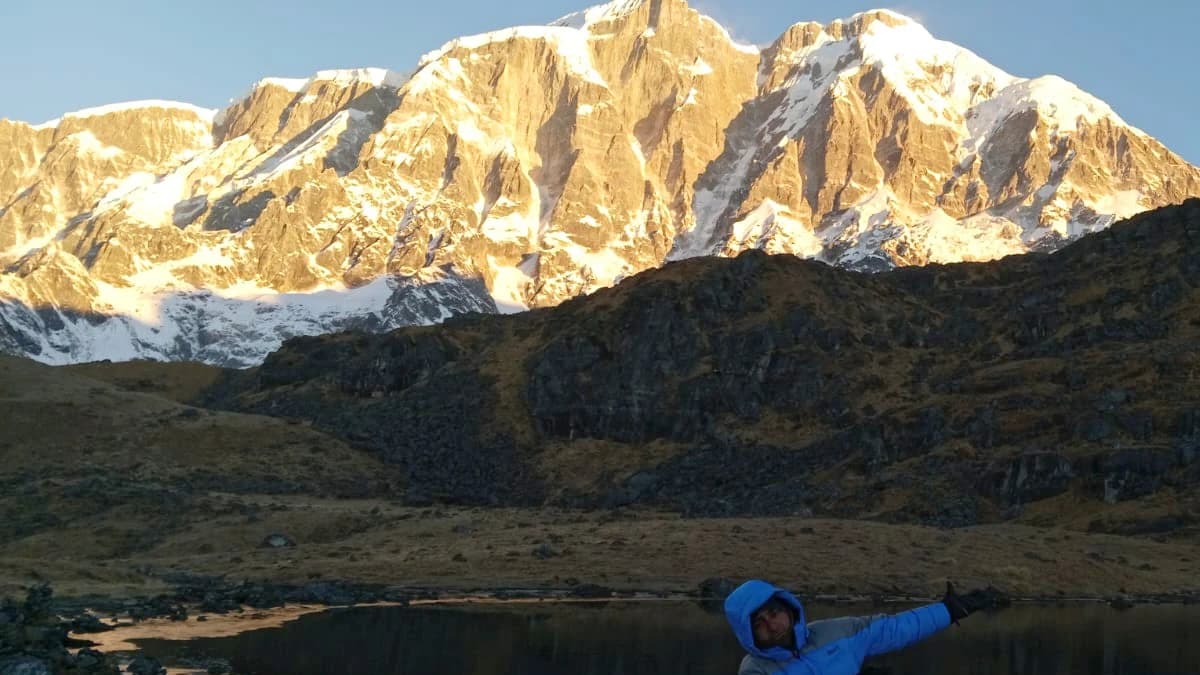
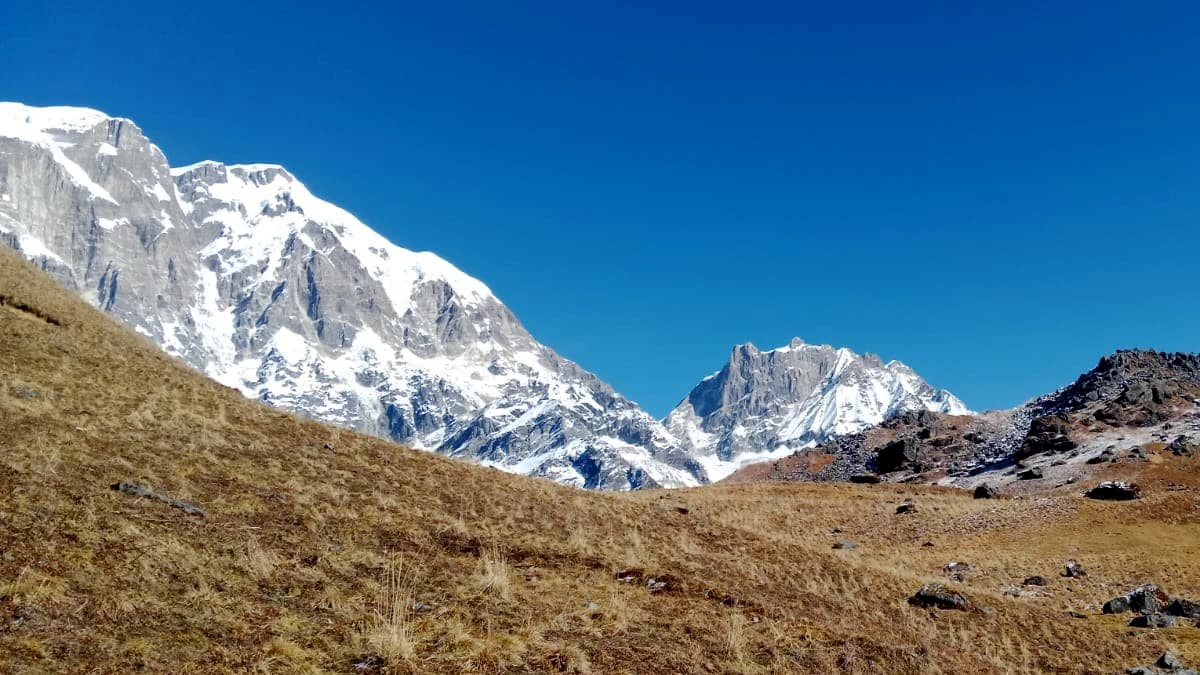
The Annapurna Three Pass Trek is a demanding and secluded trekking route located within the Annapurna Conservation Area. This expedition highlights the unspoiled beauty of the natural environment and the cultural variety encountered along the journey. It offers an excellent chance to experience the breathtaking landscapes, rich biodiversity, cultural richness, pristine beauty, glaciers, lakes, and stunning mountain views of the Annapurna, Dhaulagiri, and Manaslu ranges. The Three Pass Trek is a recently established trekking route that features the Namun La at 4850m/15912 ft, Kang La at 5,306m/17,408ft, and Mesokanto La at 5,330m/17,486ft. These passes are among the most remarkable trekking paths in the Annapurna region. If you are seeking a three-week adventure on an off-the-beaten-path trek in Nepal, the Three Pass Trek is ideal for you. Reserve the Three Pass Annapurna Trek with the local expert team at Himalayan Trekking Path Pvt. Ltd for the best offers, exceptional hospitality, outstanding service, all at an affordable price.

Annapurna Three Pass Trek highlights

  • Kathmandu: This Adventure starts and ends at the Point
  • Pokhara: Explore the picturesque Lake City of Pokhara
  • Kapuche Lake: Discover the lowest glacier lake
  • immerse in the beautiful village of Sikles 
  • Best off-the-beaten-path trek of the Annapurna region 
  • Cross the Namun La Pass- 5550m
  • Explore the Classical Annapurna Circuit Trek 
  • Nar Phu Valley Trek, the remote and untouched beauty of the isolated villages
  • Flora, Fauna, Monasteries, and Buddhist culture 
  • Challenging Kang La Pass- 5306m
  • Visit Manang and Tilicho Lake (4919m), the highest lake 
  • Mesokanto La Pass -5330m 
  • Explore the lower Mustang region that includes Muktinath and Jomsom 
  • Scenic flight to Pokhara and drive back to Kathmandu 

Namun La Pass - 5550m

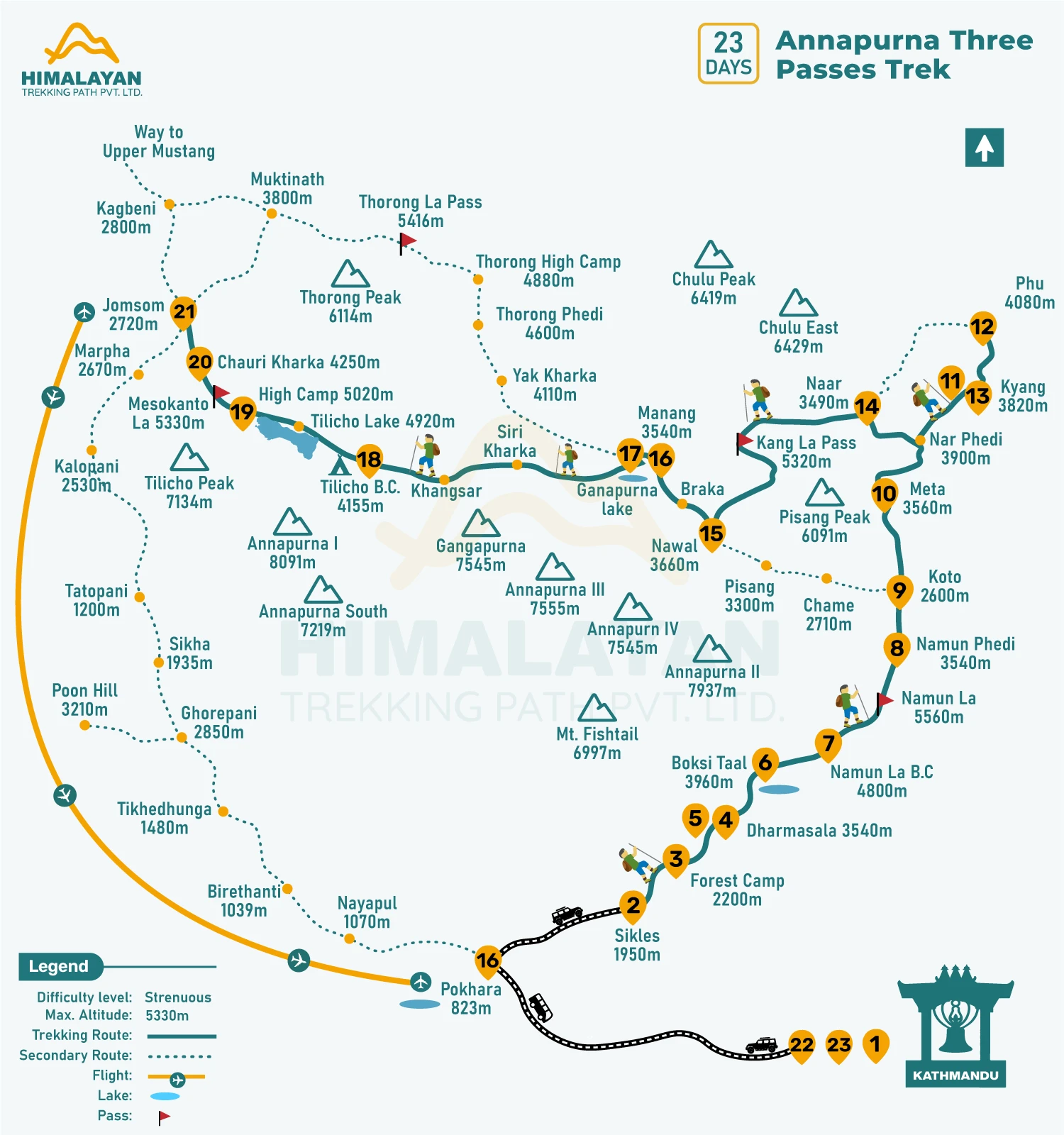
Namun La Pass is a prominent high pass in the Annapurna region, situated between Boksi Taal and Koto village. It rises to an elevation of 5550m/18208 feet above sea level, presenting one of the most breathtaking and challenging routes. This trek, which is off the beaten path, provides an authentic trekking experience that can only be achieved through camping and basic tea house accommodations. The journey reveals hidden treasures and showcases a rich diversity of unspoiled natural and cultural heritage. Travelers will pass through an untouched village, enjoy scenic landscapes, traverse the Himalayan terraces, and witness the magnificent Himalayan ranges of Annapurna and Manaslu. This trail is a less-frequented trekking route that begins in Pokhara and leads to Namun La Pass via Sikles, Forest Camp, Dharmasala, and Boksi Taal.

Kang La Pass - 5306m

The Kang La Pass trek, situated at an elevation of 5306m, serves as a connection between the Nar Phu Valley trek and the Annapurna Circuit trek. This trek is renowned for its breathtaking scenery, allowing you to discover two iconic landscapes and the rich cultural heritage rooted in Tibetan villages like Nar and Phu. The Kang La Pass Trek is the primary pass of the Annapurna Three Pass Trek, showcasing the ancient civilization of the arid Himalayan region, along with its way of life, culture, and monasteries. The Nar Phu Valley trek is one of Nepal's most iconic and less-traveled trekking areas, where you can immerse yourself in untouched culture, ancient lifestyles, vibrant cultural villages, and serene, stunning landscapes. You can visit beautiful villages, enjoy meditation in the monasteries, and experience the diverse climates and natural beauty. This trek offers spectacular views of the Annapurna region.

Mesokanto La (5,330m)

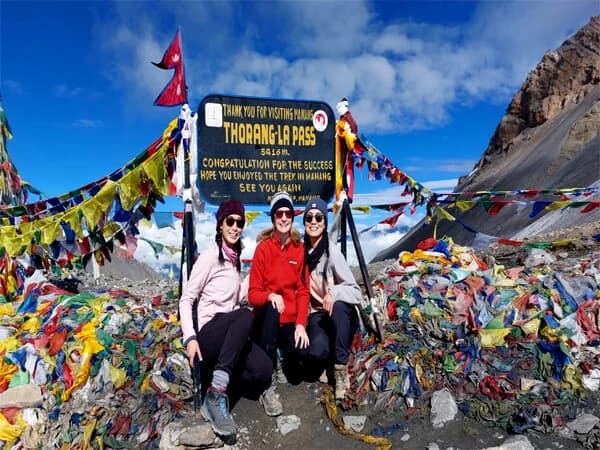
The Mesokanto La Pass is regarded as the most demanding yet fulfilling high pass in the Annapurna region. It serves as an alternative to the Thorong La Pass, which stands at 5,416 m. Situated between Tilicho Lake and Jomsom, this pass necessitates camping accommodations. Recently, Mesokanto La Pass has been gaining popularity, attracting those who are physically fit and experienced. Explore Tilicho Lake, the highest lake, before trekking to the Mesokanto High Camp, and then proceed to the summit of the Mesokanto La Pass. From this vantage point, you can enjoy breathtaking views of the Annapurna and Dhaulagiri Ranges. This pass marks the conclusion of the Annapurna Three Pass Trek.

How can one get to Sikles village?

The Annapurna Three Pass Trek begins in Kathmandu with a picturesque drive or flight to Pokhara. Upon arriving in Pokhara, you can enjoy the scenic journey to Sikles village. This village is situated in the Annapurna region and serves as the starting point for several treks, including the Kapuche Lake trek and Namun La Pass Trek. The distance from Pokhara is approximately 42 km, which takes about 2 hours to drive through beautiful villages, landscapes, and varied terrain. Sikles is the famous Gurung Village that showcases the pristine cultural and natural beauty, the ancient lifestyle, and vibrant local houses.

Journey from Silkes to Namun La Pass?

The Annapurna Three Pass Trek is one of the most thrilling and demanding adventures in the region, highlighted by the ascent of the impressive Namun La Pass (5,550m). This section of the journey requires full camping support, including experienced crew members, as the route passes through remote and untouched Himalayan terrain. Beginning from the traditional Gurung village of Sikles, the trail leads through remarkable landscapes and serene locations such as Forest Camp, Dharmasala, Boksi Taal, and the Namun La Base Camp. Trekkers should plan for at least five nights of camping in this section, with the possibility of additional days if weather conditions are unfavorable.

If you are looking to book this extraordinary expedition with a reliable and professional team, Himalayan Trekking Path Pvt. Ltd. is ready to assist you with expert guidance, safety-focused services, and a well-organized trekking experience.

Best Time for Annapurna Three Pass Trek

The best time for the Annapurna Three Pass Trek is during the stable-weather seasons of spring (March to May) and autumn (September to November). These periods offer clear skies, excellent visibility, and comfortable temperatures, making the high-altitude crossings—including Namun La Pass—safer and more enjoyable. In spring, the trail comes alive with blooming rhododendron forests, fresh greenery, and mild weather, creating a vibrant trekking atmosphere. Autumn is known for its crisp air, dry trails, and panoramic mountain views after the monsoon, providing ideal conditions for camping and high-pass navigation.

Winter (December to February) brings heavy snowfall and extreme cold, making the passes risky, while the monsoon season (June to August) causes slippery trails and limited visibility. To fully enjoy the trek’s remote beauty and challenging terrain, choosing spring or autumn ensures the best balance of safety, scenery, and overall trekking experience.

Annapurna Three Pass Trek Permits and Costs

The Annapurna Three Pass Trek requires several important permits to ensure regulated and safe travel across the region. Trekkers must first obtain the Annapurna Conservation Area Permit (ACAP), which costs NPR 3,000 per person and directly supports conservation efforts and trail maintenance. Additionally, the Trekkers’ Information Management System (TIMS) card is mandatory, costing NPR 2,000 per person, and is essential for trekkers’ safety, record tracking, and emergency support. As the trek may include entering the Nar Phu Valley or nearby restricted sections, a Restricted Area Permit (RAP) is also required. This permit costs USD 100 per person for the first seven days, and government regulations require at least two trekkers to be registered under the same permit. These combined permits help conserve the region’s natural and cultural heritage while ensuring a secure and well-managed trekking experience for all adventurers.

Annapurna Three Pass Trek Cost for 2026 (update)

The cost of the Annapurna Three Pass Trek begins at USD 3000 and can go up to USD 6000 per person, depending on the size of the group. The price of the package fluctuates based on factors such as duration, services provided, season, itinerary, and what is included in the package. This trek, which involves three passes, is both challenging and remote, necessitating camping. By choosing Himalayan Trekking Path Pvt. Ltd, you will receive an excellent package at a competitive price, along with exceptional service. Our package includes camping gear, accommodation, permits, meals, a guide, porters, and more, as specified in the inclusions and exclusions. If you are trekking solo, the cost is higher, while those in groups of two or more will benefit from a discount.

  • For solo trekkers, the price for the Annapurna Three Pass Trek is USD 6000.
  • If you are part of a group of 2 to 6, the cost of the three-pass trek is USD 3500 per person.
  • You can book the Three Pass Trek for USD 3000 per person if you are in a group of 7 to 10.
Itinerary
Tour PlanExpand All
Max. Altitude: 1350mAccommodation: Hotel
Max. Altitude: 1950mMeal: Lunch & DinnerAccommodation: Tea House
Max. Altitude: 2200mMeal: Breakfast, Lunch & DinnerAccommodation: Tea House
Max. Altitude: 3540mMeal: Breakfast, Lunch & DinnerAccommodation: Tea House
Max. Altitude: 3960mMeal: Breakfast, Lunch & DinnerAccommodation: Tea House
Max. Altitude: 4800mMeal: Breakfast, Lunch, & DinnerAccommodation: Tea House
Max. Altitude: 5560mMeal: Breakfast, Lunch, & DinnerAccommodation: Tea House
Max. Altitude: 2600mMeal: Breakfast, Lunch, & DinnerAccommodation: Tea House
Max. Altitude: 3560mMeal: Breakfast, Lunch & DinnerAccommodation: Tea House
Max. Altitude: 3820mMeal: Breakfast, Lunch & DinnerAccommodation: Tea House
Max. Altitude: 4080mMeal: Breakfast, Lunch, & DinnerAccommodation: Tea House
Max. Altitude: 3820mMeal: Breakfast, Lunch, & DinnerAccommodation: Tea House
Max. Altitude: 3490mMeal: Breakfast, Lunch, & DinnerAccommodation: Tea House
Max. Altitude: 5306mMeal: Breakfast, Lunch, & DinnerAccommodation: Tea House
Max. Altitude: 3540mMeal: Breakfast, Lunch, & DinnerAccommodation: Tea House
Max. Altitude: 4155mMeal: Breakfast, Lunch, & DinnerAccommodation: Tea House
Max. Altitude: 5020mMeal: Breakfast, Lunch, & DinnerAccommodation: Tea House
Max. Altitude: 5330mMeal: Breakfast, Lunch, & DinnerAccommodation: Tea House
Max. Altitude: 2720mMeal: Breakfast, Lunch, & DinnerAccommodation: Tea House
Max. Altitude: 1400mMeal: Breakfast, Lunch, & DinnerAccommodation: Tea House
Max. Altitude: 1400mMeal: Breakfast
Cost Details
Included

Transporation: 

  • All the Airport pick-up and drop-off service as per the Annapurna Three Pass Trek itinerary 
  • Kathmandu to Pokhara and Sikles by drive 
  • Jomsom to Pokhara by flight or jeep drive 
  • Pokhara to Kathmandu by flight 

Accommodation and Meal in Kathmandu:

  • 2 nights 3-star hotel accommodation with complimentary breakfast in Kathmandu
  • Farewell Dinner after the Upper Dolpo Trek is completed 

Mountain Accommodation, Meals, and Drinks:

  • All the Mountain Accommodation (Camping & Tea House) with full board meals 
  • Spring Water for drinking, Hot Water, and Hot Drinks (Tea or Coffee)
  • Tea House and Tent Accommodation for the Mountain
  • Full board Meal in the mountains that includes (Breakfast, lunch, and Dinner)
  • Fresh and canned fruit, nuts, snacks, and cookies 
  • All the Camping gear and essential supplies 

Guide and support team:

  • A professional Trekking Guide, a gov license holder, and an expert for the Upper Dolpo Trek
  • Appropriate Support team ( Porter, Cook, Helper, and Sherpa)
  • Staff-related expenses such as Salary, Transportation, meals, insurance, trekking gear, and accommodation.

Trekking Permits and Fees:

  • Annapurna Conservation Areas Permits- Rs3000 per person 
  • Nar Phu restricted permit (USD100 for 7days per person and beyond USD10 each day
  • TIMS (Trekkers Information Management System) (Rs2000 per person)
  • Government VAT 13 % and official fees 

Other services:

  • Himalayan Trekking Path provides a Cap, a Duffel Bag, and a Trekking Map
  • Baggage Storage service, Money exchange facility 
  • First Aid service 
Excluded

Travel & Entry Expenses

  • Nepal Entry Visa Fees: Payable upon arrival at Tribhuvan International Airport or online.
  • International Airfare: Flights to and from Nepal are not included.
  • Travel Insurance: Each trekker must arrange their own comprehensive insurance that includes high-altitude trekking and emergency evacuation.

Food & Drinks in Kathmandu:

  • Meals in Kathmandu – Lunch and dinner in the capital city are excluded.
  • Snacks, soft drinks, and alcoholic beverages 

Personal Services & Facilities

  • Hot Showers, Bottled water & Wi-Fi Access
  • Laundry Services: Not included and available at an additional cost, where possible.

First Aid Service:

  • First Aid: We recommend that all trekkers carry a basic personal first aid kit and any essential medications. While guides carry limited medical supplies, having your kit ensures you're prepared for minor injuries, altitude sickness, or common ailments during the trek.

Personal Items:

  • Toiletries: Please bring your own toilet paper, towel, shampoo, toothbrush, toothpaste, lotion, and shower gel.
  • Trekking Gear: Personal trekking gear (e.g., sleeping bag, down jacket, hiking poles) is not provided. Rentals may be available in Kathmandu.

Gratuities

  • Tips for Guide and Porter: Tipping is customary and expected, and not included in the package price.
Dates & Availability
Starts:Mar 05, 2026Ends:Mar 27, 2026
PriceUS$3500
AvailabilityGuaranteed
Starts:Mar 10, 2026Ends:Apr 01, 2026
PriceUS$3500
AvailabilityGuaranteed
Starts:Mar 14, 2026Ends:Apr 05, 2026
PriceUS$3500
AvailabilityGuaranteed
Starts:Mar 15, 2026Ends:Apr 06, 2026
PriceUS$3500
AvailabilityGuaranteed
Starts:Mar 17, 2026Ends:Apr 08, 2026
PriceUS$3500
AvailabilityGuaranteed
Starts:Mar 20, 2026Ends:Apr 11, 2026
PriceUS$3500
AvailabilityGuaranteed
Starts:Mar 23, 2026Ends:Apr 14, 2026
PriceUS$3500
AvailabilityGuaranteed
Starts:Mar 25, 2026Ends:Apr 16, 2026
PriceUS$3500
AvailabilityGuaranteed
Starts:Mar 27, 2026Ends:Apr 18, 2026
PriceUS$3500
AvailabilityGuaranteed
Starts:Mar 31, 2026Ends:Apr 22, 2026
PriceUS$3500
AvailabilityGuaranteed

The Annapurna Three Pass Trek is one of the latest and most challenging trekking routes in the Annapurna region, designed for trekkers seeking true Himalayan adventure. This demanding journey includes crossing three high and technical passes—Namun La Pass, Kang La Pass, and Mesokanto La Pass—each requiring proper camping arrangements, an experienced support crew, and strong physical preparation. The route explores remote valleys, untouched landscapes, and culturally rich villages, offering a rewarding experience for those ready to take on its challenges.

To help trekkers join this remarkable expedition with confidence, Himalayan Trekking Path Pvt. Ltd. offers fixed departure dates for the Annapurna Three Pass Trek, ensuring a well-organized, safe, and expertly guided adventure. Our professional team handles logistics, camping facilities, and high-altitude support, allowing you to focus entirely on the journey. The scheduled group departures for this trek are listed below, providing flexibility and convenience for your travel planning.

FAQs

The Annapurna Three Pass Trek is an advanced trekking route in the Annapurna region of Nepal, connecting multiple high-altitude passes: Namun La (5500 m), Kang La (5,300m), and Mesokanto La (5,200m). It offers panoramic views of Annapurna, Dhaulagiri, Machapuchhre, and other Himalayan peaks. Unlike regular treks, this route requires camping, strong physical fitness, and acclimatization strategies. Trekkers experience diverse landscapes—from subtropical forests and terraced villages to alpine meadows and glacial terrains. The trek typically takes 18–24 days, depending on pace, and is suitable for experienced trekkers seeking off-the-beaten-path adventure with cultural immersion and challenging high-altitude trekking.

The Annapurna Three Pass Trek is considered highly challenging due to its high-altitude passes, steep ascents, and long trekking days. Trekkers must navigate rugged terrains, rocky trails, and occasionally snow-covered paths, especially at Kang La and Mesokanto La Passes. Proper acclimatization is essential to avoid altitude sickness. Physically, trekkers should be able to walk 6–8 hours daily carrying a moderate pack. Prior trekking experience at altitudes above 4,000 meters is highly recommended. The trek demands endurance, mental resilience, and preparation for sudden weather changes. Guides and porters are strongly advised for safety and logistical support.

The best time to trek is during spring (March–May) and autumn (September–November). Spring offers blooming rhododendrons and clear mountain views, while autumn provides stable weather and dry trails. Summers bring monsoon rains, slippery paths, and leeches, whereas winters are extremely cold with heavy snowfall at high passes, increasing the risk of trail blockage. Early spring may still have snow on higher passes, requiring crampons or ice axes. Autumn is the most popular for clear skies and ideal temperatures. Trekking during these windows ensures safety, spectacular scenery, and comfortable camping conditions.

For trekkers seeking a less crowded route in the Annapurna region, the Annapurna Three Pass Trek is an ideal choice. This adventurous trail offers a unique blend of high-altitude passes, including Namun La, Kang La, and Mesokanto La, providing breathtaking Himalayan views far from the usual tourist crowds. It combines the experience of traditional teahouse stays in villages with challenging camping nights at remote locations. While it may not be suitable for first-time trekkers due to its difficulty and high-altitude demands, experienced hikers will find it a rewarding mix of adventure, culture, and pristine natural beauty.

The full Annapurna Three Pass Trek generally takes 18–24 days, including acclimatization days and approach/exit from major towns like Pokhara or Jomsom. A typical itinerary involves 12–15 days of trekking across villages, valleys, and high passes, plus travel days to reach the trailhead and return. Including optional rest or sightseeing days in Pokhara, Kagbeni, or Tatopani can extend the duration. The schedule can be customized depending on group fitness, weather conditions, and individual pace. Trekking with a guide ensures proper acclimatization and adherence to safe itineraries to minimize the risk of altitude sickness and fatigue.

Kang La Pass is the highest, standing at approximately 5,300 meters (17,388 feet). It is followed closely by Mesokanto La at 5,200 meters and Namun La at 5,143 meters. Crossing Kang La Pass requires trekking through snow, glaciers, and steep ridges, demanding experience in high-altitude trekking and proper acclimatization. Trekkers often face low temperatures, strong winds, and thin air, making pace adjustment essential. The views from Kang La are panoramic, offering breathtaking perspectives of the Annapurna, Dhaulagiri, and Mustang ranges, making the physical challenge worthwhile for experienced trekkers seeking adventure and scenic reward.

Yes, prior trekking experience at high altitudes is strongly recommended. The Three Pass Trek involves long days, steep ascents, and trekking above 5,000 meters, where altitude sickness risk is significant. Experience in 4,000–5,000-meter treks like Annapurna Base Camp, Ghorepani Poon Hill, or Mera Peak can help prepare physically and mentally. Novice trekkers may struggle with the terrain, unpredictable weather, and camping logistics. A guided trek with porters and an experienced crew can mitigate risks, but personal fitness, endurance, and high-altitude experience remain essential for safety and successful completion.

While it’s possible to trek independently, hiring a guide and porter is highly recommended due to the remote nature of the route. Guides provide local knowledge, ensure proper acclimatization, and navigate difficult passes safely. Porters carry heavy gear, tents, and food, reducing physical strain and allowing trekkers to conserve energy for high-altitude days. Their presence is crucial in emergency situations, particularly in case of altitude sickness or sudden weather changes. Most trekking agencies include certified guides and experienced porters, ensuring logistical support, safety, and cultural insight throughout the trek.

Yes, camping is essential for the Annapurna Three Pass Trek, as tea houses are scarce along high-altitude passes like Kang La and Mesokanto La. Trekkers carry tents, sleeping bags, and cooking equipment, usually provided by agencies along with guides and porters. Campsites are strategically placed near water sources and flat terrain. Camping allows flexibility with acclimatization schedules and early starts to cross challenging passes. Trekkers should be prepared for cold nights, potential snowfall, and basic hygiene conditions. Experienced trekking agencies provide all necessary camping logistics, ensuring safety, comfort, and efficient organization throughout the journey.

A high level of fitness and endurance is required. Trekkers must walk 6–8 hours daily on uneven, rocky, and sometimes snow-covered terrain, carrying light backpacks. Cardiovascular fitness, leg strength, and stamina are essential to manage long ascents, descents, and altitude challenges. Pre-trek preparation should include aerobic exercises, hiking with a weighted backpack, and stair climbing. Mental resilience is equally important for facing harsh weather, fatigue, and remote conditions. Adequate rest, hydration, and proper diet before and during the trek significantly impact performance and reduce the risk of exhaustion or altitude-related complications.

Packing for the Three Pass Trek requires high-altitude trekking essentials, including warm layered clothing, insulated jackets, trekking boots, gloves, hats, sunglasses, and a down jacket for cold nights. Additional items include trekking poles, headlamps, water bottles, sunscreen, and personal first aid kits. For camping, a sleeping bag rated for -10°C, tent (if not provided by agency), and cooking utensils are needed. Lightweight clothing for daytime and waterproof gear for rain or snow is essential. Packing smartly ensures comfort, safety, and mobility during long treks and unpredictable Himalayan weather.

Yes, solo trekking is possible, but guides and porters are strongly recommended for safety. The trail crosses remote areas with limited communication and medical facilities. Solo trekkers face higher risks in case of altitude sickness, injury, or sudden weather changes. Joining a group or arranging an agency-supported trek enhances safety, provides logistical support, and ensures local guidance. Solo trekkers must carry a satellite phone or SIM with coverage and inform local authorities about their itinerary. Experienced guides also facilitate cultural interactions, navigation, and emergency response.

Preparation involves cardiovascular training, strength exercises, and trekking practice with backpacks. Activities like stair climbing, hill walks, and aerobic workouts build endurance. Mental preparation includes developing patience, stress tolerance, and adaptability for long, unpredictable days at high altitude. Knowledge of basic first aid, snow trekking techniques, and acclimatization strategies enhances confidence. Reading itineraries, understanding weather patterns, and training for extreme cold also help. Joining pre-trek workshops or guided hikes can simulate trekking conditions. A disciplined training routine ensures higher chances of completing all three passes safely and enjoying the Himalayan experience.

Trekkers should have reasonable fitness for 4–6 hours of walking daily. Prior cardio and endurance preparation ensures an enjoyable experience.

Altitude sickness is possible above 3,000 meters. Gradual ascent, proper hydration, and acclimatization are essential for safety. Guides monitor trekkers closely.